IT Site Traffic Growth Resilient Despite AI Search Roll Out
The IT sector appears to be the least affected by the rollout of AI-powered search, according to new research.
The Google AI Search Shift Report by digital marketing and PR agency Tank analyses website traffic across 800 companies in 16 different sectors before and after the rollout of Google AI Overviews and AI Mode, to identify which industries are most and least impacted.
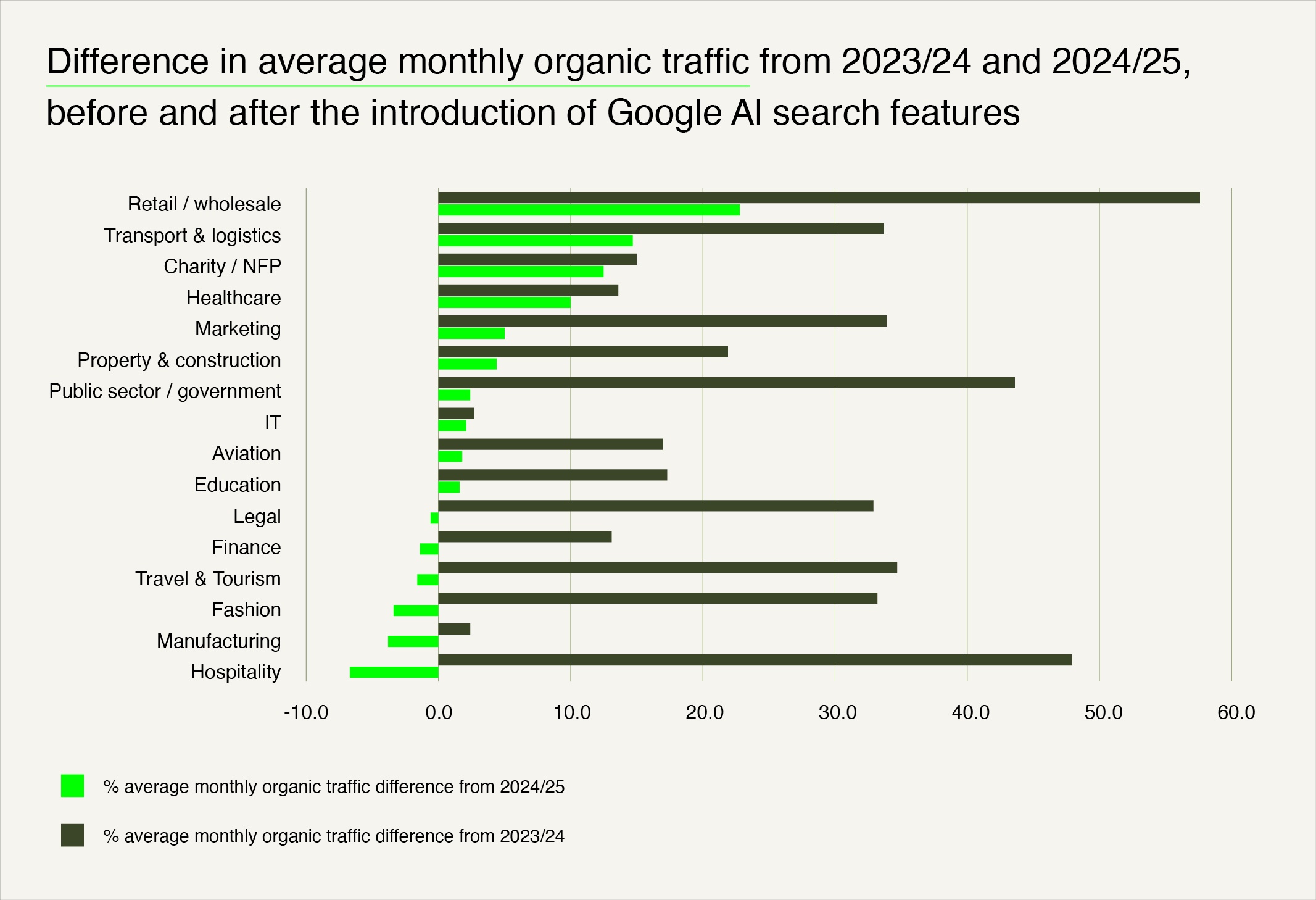
Across all industries, average monthly traffic growth from 2024 to 2025 has dropped from 26.3% to just 3.7% – a growth difference of nearly 86%.
This decline in traffic comes despite continued global growth in internet usage. Latest data shows that the number of internet users worldwide has grown by 2.7% year-on-year, with 146 million new users in the last 12 months.
The global ‘connected’ population has almost doubled over the past decade – increasing from 2.98 billion in July 2015 to 5.65 billion in July 2025.
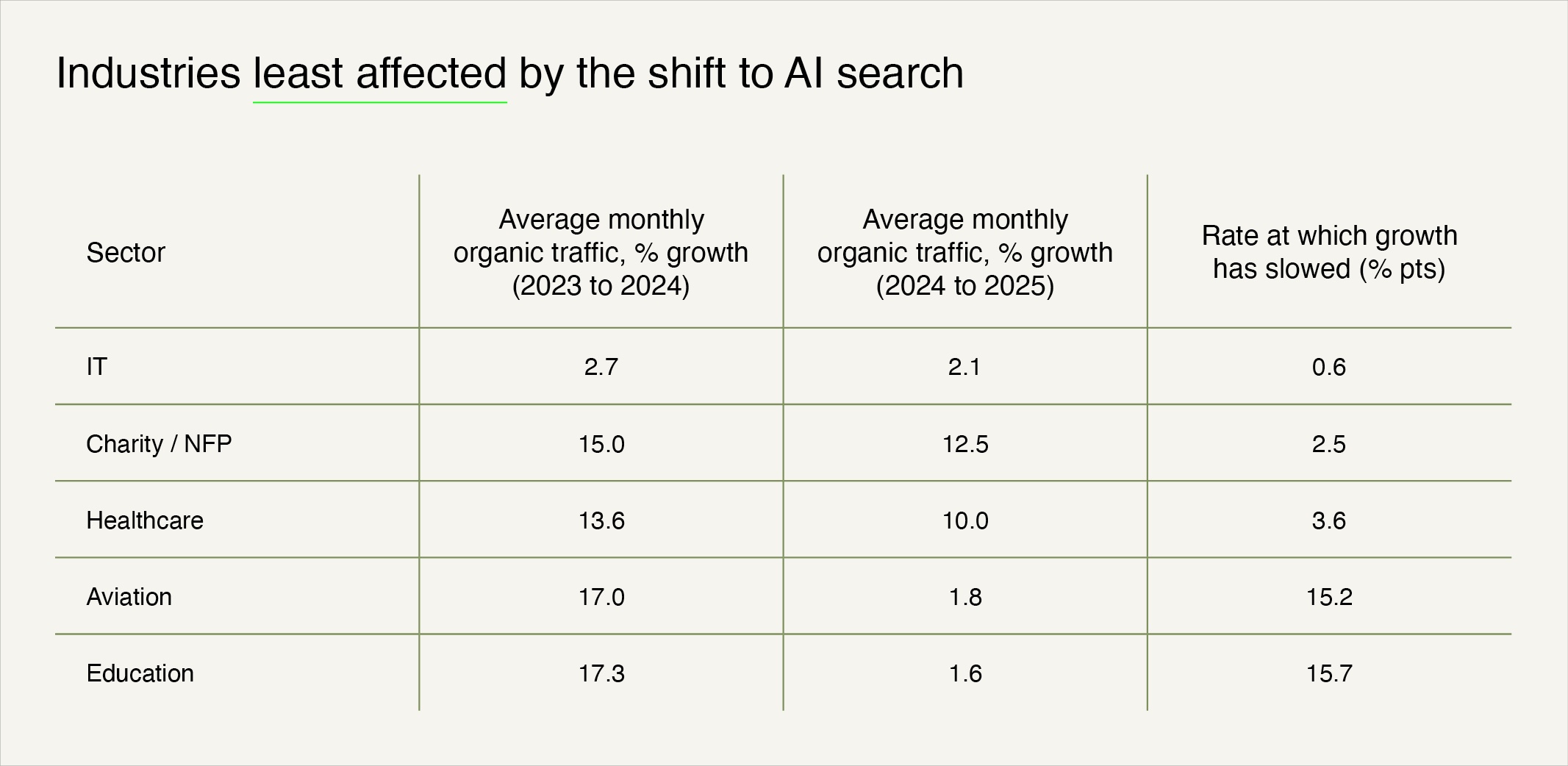
But IT has emerged as the least affected sector, with organic traffic growth slowing to 2.1% compared to 2.7% the year before – a difference of just 0.6 percentage points.
This resilience could be due to the nature of tech-related search queries or a faster response to changes like the introduction of AI overviews.
Consumers now rely on zero-click searches, with 60% of searches now ending without a click. While fewer people are clicking through to businesses websites, there’s still opportunities: those that do engage are likely to be deeper in the buying stages, ultimately bringing more high-quality leads.
Industries least affected by the shift to AI search
Industries hardest hit by the shift to AI search
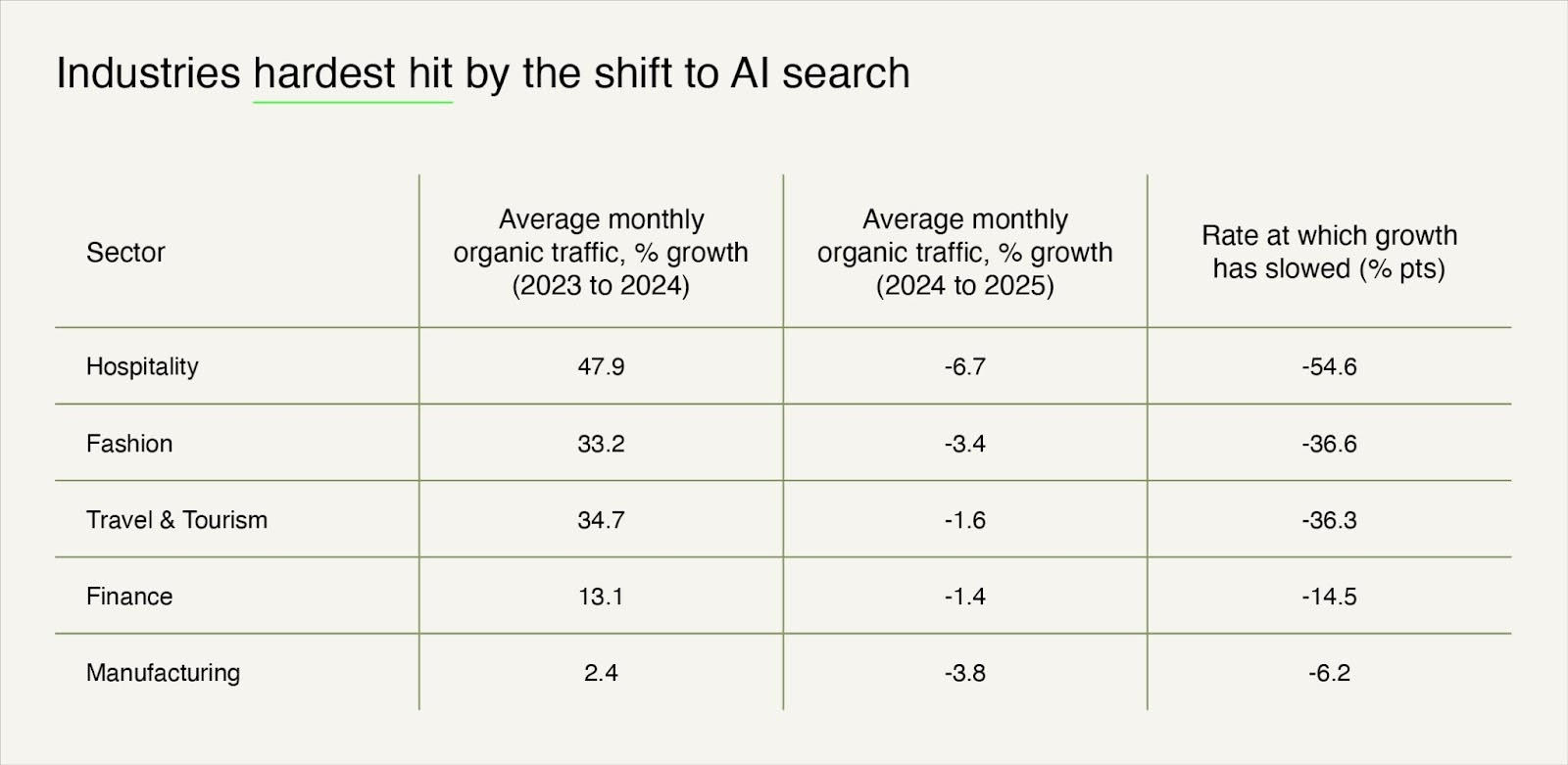
On the other end of the spectrum, hospitality experienced the biggest decline in organic traffic following Google’s AI rollout, followed by fashion and travel and tourism.
The bigger picture
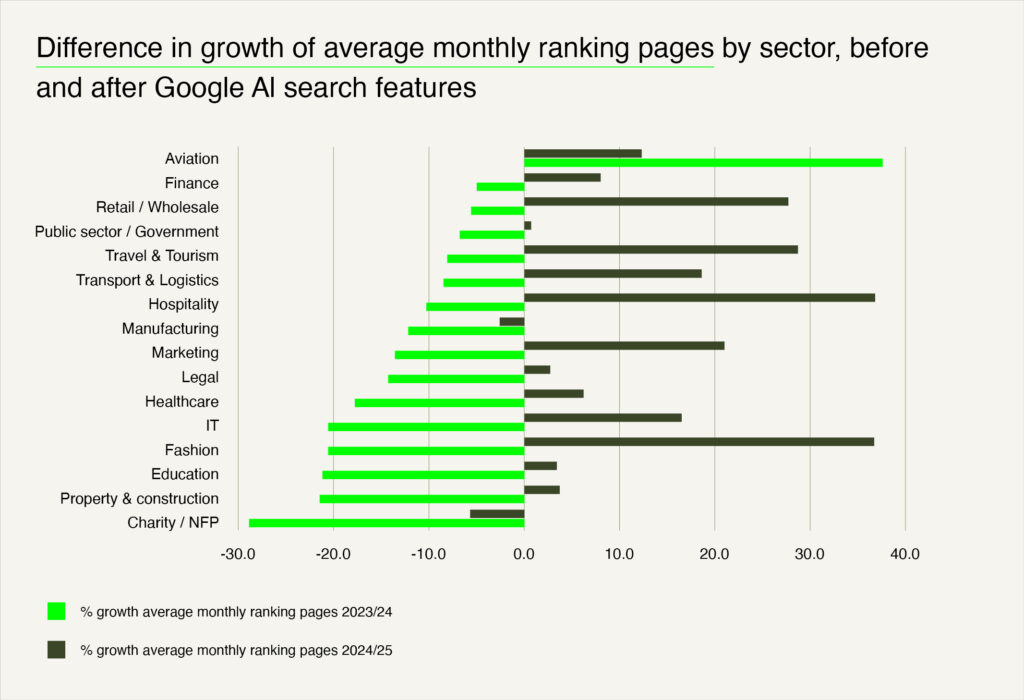
The research also looked at ranking pages, revealing that IT brands ranking high in search results before Google launched its AI features are now ranking low – despite being among the least impacted in terms of organic traffic.
Ranking pages, refers to the total number of pages from a site ranking in the top 100 organic search results. Sites with fewer ranking pages are less visible on organic search and are less likely to get those all-important clicks.
IT businesses saw 16.5% growth in ranking pages in the year before AI-search. However, the sector now faces a ranking page decline of -20.6%.
Across all industries, websites have 11.1% fewer ranking pages after the launch of AI mode, whereas the previous year saw ranking pages increase by 13.4% on average.
Martin Harris, head of digital at Tank, said:
“While AI-powered search makes life easier for the consumer, it could spell trouble for businesses that rely on website visitors to drive sales. And there’s things that customers could be missing out on, like discovering new brands and experiences, as well as things like exclusive discounts.
“The silver lining of the shift to AI search is that those who do land on your website are likely to be further along in the buying journey than casual browsers. This provides new opportunities for brands to capitalise on a smaller, but more targeted customer group.
“IT businesses have already shown resilience in keeping up with the shift to AI search, but there’s more to be done if we’re to keep traffic growing. For brands, putting in a strategy on getting found – not just by search engines, but also by AI – is going to be essential.”
To read the full report visit: https://tank.co.uk/the-google-ai-search-shift-report
ENDS
Methodology
Tank used Ahrefs traffic checker tool to estimate organic web traffic and ranking pages across 16 different UK sectors before and after the UK launch of Google AI overviews (15 August 2024) and AI Mode (28 July 2025). 4,800 data points were collected, then analysed.
Average monthly organic traffic and ranking pages were calculated for three annual periods (28 August to 27 August) from 2022 to 2025.
Percentage changes in growth were compared year-on-year to show which industries were most and least affected by AI search.The 2023-2024 dataset includes two weeks of AI Overviews activity; however, this has minimal impact on yearly averages. The 2024-2025 period includes a full year of AI Overviews and one month of AI Mode. Data correct as of August 2025.
About AI Mode
AI mode replaces the traditional results format of links with a chat-like interface similar to that of LLMs like ChatGPT.
About AI Overviews
AI Overview is a Google Search feature that provides an AI-generated response to users’ queries by sifting through multiple sources of information and collating this into a single brief summary.