When One Region Fails: What the AWS Outage Still Teaches Us About Real Cloud Resilience
By Corey Beck, Director of Cloud Technologies

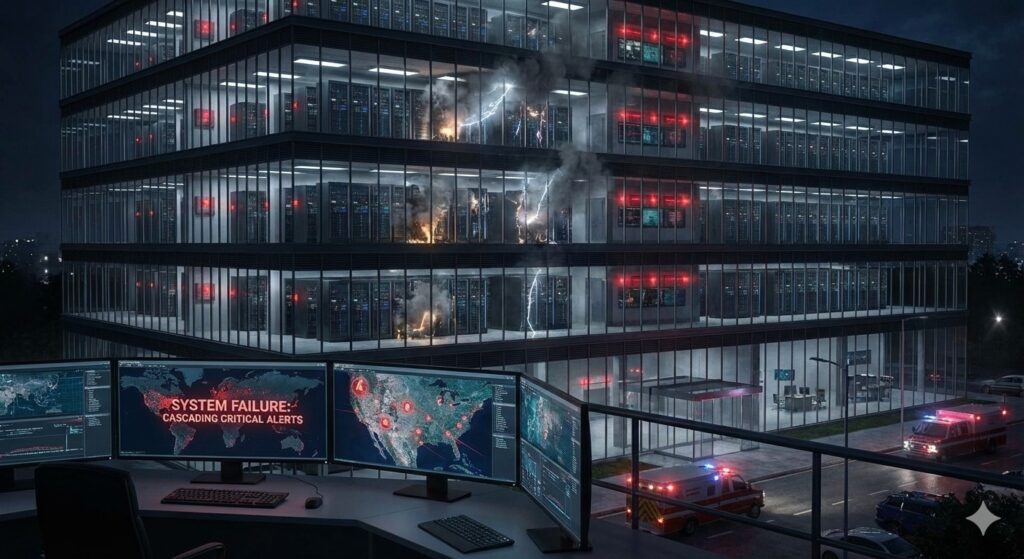
The recent disruption in the AWS US-East-1 region set off a chain reaction across dependent systems worldwide. What began as a network-resolution issue spread through DNS, databases, APIs, and containers, interrupting workloads that had appeared isolated from one another.
The details of the incident matter less than what it revealed: most modern cloud environments are interconnected in ways their operators rarely test. A problem in one regional network can surface in every service that leans on it.
Rethinking What Resilience Means
Cloud infrastructure provides redundancy, but not resilience by default. Many organizations assume that running on a large cloud platform guarantees reliability. In practice, reliability depends on architecture, not hosting providers.
When a system depends on one region, one control plane, or one data source, a small issue can escalate quickly. True resilience means recognizing those dependencies and designing around them. That includes preparing for partial degradation rather than complete availability to keep essential functions running.
The US-East-1 incident exposed how unseen dependencies can cause the widest impact.
The Three Fundamentals: Resilience, Redundancy, and Recovery
Building reliable systems starts with a few clear practices.
- Resilience begins with the expectation that components will fail. Every service should have a defined way to continue or degrade gracefully when dependencies slow down or stop responding.
- Redundancy spreads workloads and data across zones or regions, so a localized fault doesn’t interrupt critical operations.
- Recovery ensures that when a disruption happens, systems can restore service quickly through automation, documentation, and tested procedures.
These principles are well-known, but their effectiveness depends on regular validation. Backups that aren’t tested, or failovers that exist only in design diagrams, provide false confidence. The systems that performed best during the outage were those that had been exercised under realistic failure conditions.
Designing for What Actually Happens
No amount of uptime guarantees can prevent the unexpected. Networks lose routes, services hit rate limits, and updates introduce new dependencies. The goal is not to avoid failure entirely but to contain it.
Periodic architecture reviews expose hidden assumptions, including dependencies on a single DNS provider or a centralized data store. Simulating outages reveals how software and teams respond when systems slow or break. Even small rehearsals uncover issues that would otherwise appear during a real incident.
Resilience is built through repetition: design, test, learn, adjust. Each iteration hardens both infrastructure and process.
Learning From Failure
After any outage, the most useful step is reflection. What failed first? What recovered fastest? What signals were missed? Post-incident analysis should feed directly into design and monitoring improvements.
Each review provides an opportunity to replace assumptions with evidence. Over time, those adjustments create systems that respond more predictably and recover faster.
In 2026, organizations that treat every disruption as data, not disaster, are the ones that strengthen their systems the most.
How Priorities Are Changing
The AWS outage wasn’t just a technical event; it reflected how organizations must adapt their cloud strategies. As infrastructures expand, so does complexity, and with it, the potential for unseen failure paths. Designing for resilience isn’t only a technical goal; it’s an operational mindset that affects staffing, budgeting, and long-term planning.
IT priorities are shifting toward measurable reliability and intelligent automation. Teams are relying more on predictive tools to spot anomalies early and using AI to assist with pattern recognition and remediation. These technologies don’t replace engineers; they free them to focus on design and strategy rather than repetitive response work.
At the same time, the labor market around technology is evolving. Many large companies are optimizing operations and leaning more heavily on automation, which has made experienced specialists more available to smaller, faster-moving organizations, including managed service providers. That availability is reshaping how expertise flows through the industry and gives more businesses access to advanced skills once concentrated in the largest enterprises.
Heading toward 2026, technology investment will continue to follow this pattern. Budgets will favor platforms and strategies that deliver measurable value, including reduced downtime, faster recovery, and smarter use of data. Artificial intelligence will command a greater share of spending, not as hype, but as a practical way to improve reliability and decision-making.
The common thread across these trends is adaptability. Resilient systems and resilient organizations share the same trait: the ability to keep operating when conditions shift.
Looking Ahead
The AWS outage was a reminder that every digital platform has limits. Cloud computing remains the most flexible and powerful foundation for modern business, with AWS being the gold-standard, but its reliability depends on how it’s used.
Building for failure needs to be a top priority. When one region goes offline, well-architected systems adapt. They reroute, recover, and continue serving customers with minimal disruption.
As the cloud ecosystem evolves, resilience will remain the clearest measure of operational maturity. The companies that plan for disruption, test their assumptions, and refine their systems will future proof their operations and recovery more quickly.