Using the Shared Responsibility Model for Your Organization’s Cloud Security
By Nazy Fouladirad, President and COO at Tevora
Cloud computing has transformed how organizations operate by enabling remote work and harnessing innovative technologies such as artificial intelligence (AI) and machine learning (ML). Cloud computing has also grown in popularity because of its scalability, flexibility, and cost-effectiveness. This technology lets organizations use IT infrastructure and applications over the internet instead of installing them on-premises.
Nevertheless, as more organizations migrate to the cloud, ensuring robust cloud security has become paramount. Attackers know about the shift to cloud computing and are ready to exploit vulnerabilities in cloud-based infrastructure to attack businesses. These added concerns make solutions harder to navigate, and implementing security measures effectively requires understanding cloud security nuances to protect your organization.
This article outlines a cloud security framework called the Shared Responsibility Model. This popular cloud security framework divides cloud security and compliance between customers and service providers.
What is the Shared Responsibility Model?
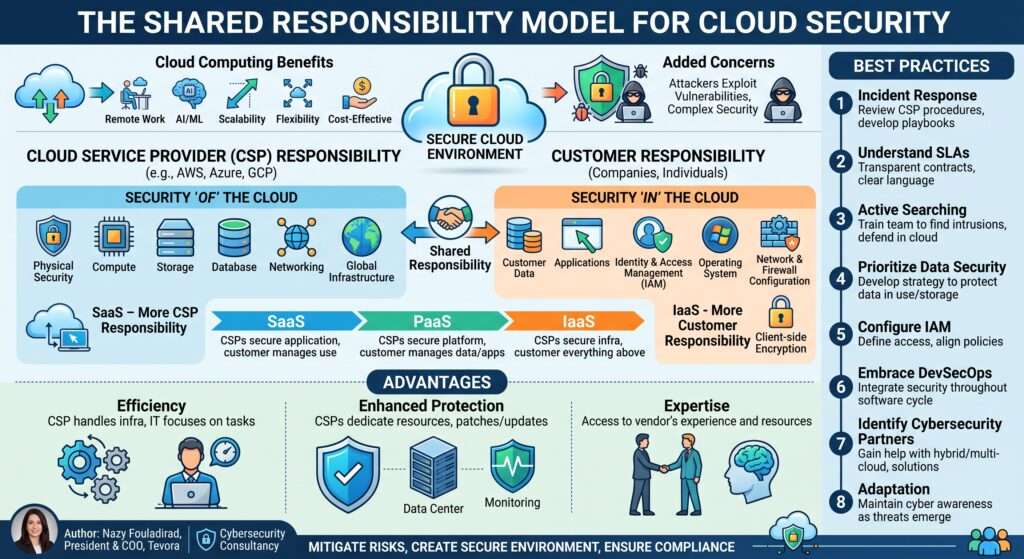
The Shared Responsibility Model is a security and compliance framework that outlines the responsibilities of the cloud service provider (CSP) and the cloud security consumer. In short, the Shared Responsibility Model dictates the role of the two key parties in cloud security.
It outlines how CSPs, such as Amazon Web Services (AWS), Microsoft Azure, and Google Cloud Platform (GCP), would be responsible for monitoring and responding to security threats related to the cloud environment itself. Customers, including companies and individuals, are responsible for protecting the data and other assets they store in the cloud environment.
Three Cloud Service Models and Shared Responsibility
To best understand what you and the CSP are responsible for, it is important to understand three main cloud service models:
- Software as a Service (SaaS): This software delivery model lets vendors centrally host an application in the cloud for subscribers to use. These are ready-made applications, such as Microsoft 365 or Google Workspace.
- Infrastructure as a Service (IaaS): As the name implies, this refers to cloud infrastructure services. CSPs provide compute resources such as virtual networks, storage, and virtual machines for customers to use.
- Platform as a Service (PaaS): PaaS is a platform delivery model you can purchase and use to develop and manage applications. Examples include Azure SQL Database and DynamoDB.
What This Means For You
In the Shared Responsibility Model, CSPs are expected to take on the security responsibility for Software as a Service (SaaS). As a customer, you would primarily be expected to monitor and configure Infrastructure as a Service (IaaS). Platform as a Service sits in the middle: CSPs secure the platform, while customers manage how they implement it.
Both the customer and CSP are accountable for securing cloud environments, and strong cloud security comes from both groups understanding their roles in cybersecurity.
Advantages of the Shared Responsibility Model
While this model can seem complex and requires coordination with the CSP, it offers several advantages. These include:
- Efficiency: Even though you bear significant responsibility under this model, the CSP handles certain security tasks. This includes hardware security, infrastructure, and software virtualization. Your IT staff can focus on other tasks and dedicate their time to the areas where they are responsible for cloud security.
- Enhanced Protection: Cloud service providers focus heavily on securing their environments. They will typically dedicate significant amounts of resources to ensure that their customer’s data is protected. Additionally, as part of their service agreement, CSPs conduct rigorous monitoring and testing and provide timely patches and updates.
- Expertise: CSPs often have deeper cloud security expertise. When working with a cloud vendor, you gain an added layer of security through access to the partner organization’s experience, access, and resources.
Best Practices
To ensure that all shared responsibilities are met, customers should consider the following best practices:
- Incident Response: Review the CSP’s incident response procedures and develop incident response playbooks to prepare for a breach.
- Understand Service Level Agreements (SLA): Service Level Agreements (SLAs) are the formal contract between the customer and service provider that defines the expected level of service. Reviewing and understanding the SLA enables full transparency and clear language outlining customer and CSP responsibilities.
- Actively Searching for Intrusions in the Cloud: CSPs are not responsible for detecting issues, such as when cloud resources are exploited due to customer mistakes. Train your IT team to defend in the cloud and equip them with the cloud security tools needed to handle issues like this.
- Prioritize Data Security: Cloud customers are always responsible for any data stored in the cloud or produced by cloud applications. With this in mind, you will need to develop a robust data security strategy specifically designed to protect cloud-based data, whether it is in use or not.
- Configure Identity Access Management (IAM): You are also responsible for defining who has access to cloud-based resources. Align access with your organization’s broader access policy.
- Embrace DevSecOps: DevSecOps refers to Development Security and Operations, and it is the practice of integrating security continuously throughout the software and/or application lifecycle. This minimizes security risks and improves compliance. Focus on embedding security in the earliest stages of the software development lifecycle.
- Identifying Cybersecurity Partners: Understanding cloud-based risks, security, and your potential responsibilities can become overwhelming and complicated, especially if your organization operates a hybrid or multi-cloud environment. A trusted cybersecurity partner can help your organization’s security team with all aspects of cloud security. This can include selecting a CSP, understanding the specific customer responsibilities, and deploying or integrating solutions that can protect the business.
- Adaptation: You and the CSP should maintain cyber awareness as new threats emerge and defense strategies change over time.
Conclusion
The Shared Responsibility Model ensures that organizations and CSPs actively contribute to securing cloud infrastructure and maintaining compliance. Under this model, customers are responsible for the security of data, applications, and workloads they deploy within the cloud, and CSPs are responsible for securing the physical infrastructure, network, and hardware.
By understanding and following this model, both the customer and the CSP can work together to create a secure cloud environment, mitigate risks, and ensure compliance with industry standards and best practices.

Author Bio:
Nazy Fouladirad is President and COO of Tevora, a global leading cybersecurity consultancy. She has dedicated her career to creating a more secure business and online environment for organizations across the country and world. She is passionate about serving her community and acts as a board member for a local nonprofit organization.