After a Breach: How Cyber Insurance Protects a Small Business
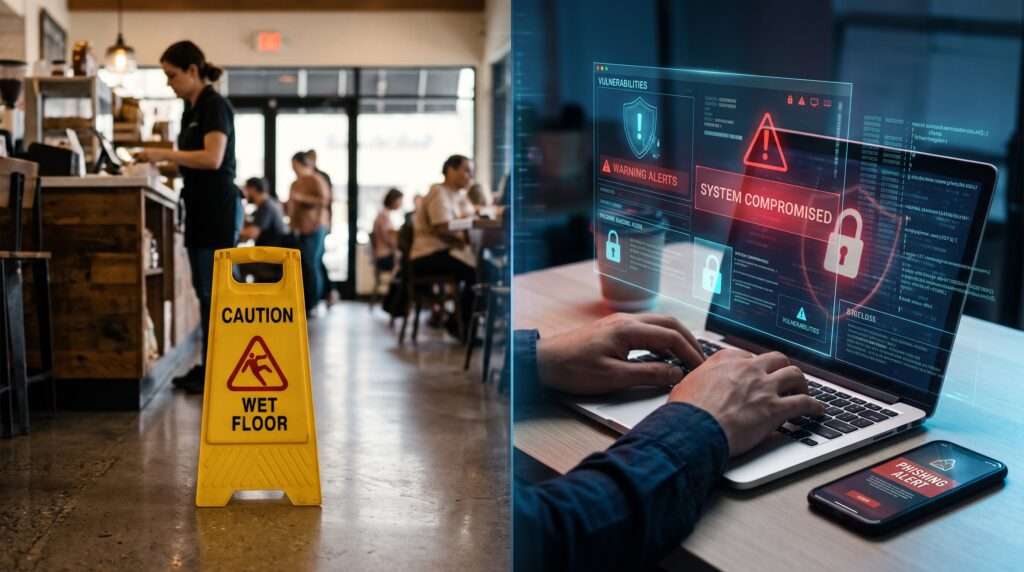
A stolen laptop, a phished password or a compromised point-of-sale system can turn an ordinary week into a legal and financial emergency for a small company. In late 2026, many owners still assume their existing business policies will absorb the damage, and that assumption is often wrong. This explainer walks through what cyber insurance generally pays for, what it tends to leave out, and how it sits beside the rest of a commercial insurance program.
What Does a Commercial Liability Insurance Policy Cover, and Does It Include a Data Breach?
A commercial liability insurance policy generally covers claims that a third party brings against your business, such as bodily injury or property damage, and it typically does not respond to a data breach on its own. Many general liability forms either exclude electronic data losses or limit them sharply, so breach costs usually belong to a separate cyber policy. Reading the exclusions section of your current policy is the quickest way to confirm where you stand.
Think of a standard commercial liability policy as the foundation for physical-world risks: a customer slips in the lobby, or a contractor’s work damages a client’s property. Cyber coverage was built for a different set of problems, including stolen records, locked systems and the notification duties that follow. The two are designed to sit side by side rather than substitute for each other.
Insurance All Stars, an independent, multi-line agency with offices in Temecula, California and Scottsdale, Arizona, places commercial coverage with the carriers it represents, including liquor liability for Arizona businesses that serve alcohol. Its commercial lines also include cyber liability, the coverage this explainer focuses on.
What Costs Does Cyber Insurance Pay for After a Breach?
Cyber insurance typically pays for two categories of loss: your own response costs and the claims others make against you. Which items are included, and at what limits, depends on the policy and the carrier, so the list below describes common structure rather than any single contract. Your own response costs often include the following.
- Forensic investigation to learn what was accessed and how
- Legal counsel to determine which notification laws apply
- Notification letters and credit monitoring offered to affected people
- Data restoration and system recovery
- Business interruption while systems are down
- Ransomware negotiation and extortion response, where the policy includes it
- Public relations support to manage customer trust
Third-party coverage responds when customers, partners or regulators pursue the business. It generally includes defense costs and settlements or judgments tied to the breach, and some policies add regulatory penalties and payment card assessments where the law allows them to be insured. Because claims can arrive months after the event, defense coverage often matters as much as the response costs.
Process matters too. Many policies require prompt reporting and steer owners toward approved response vendors, so a business that hires its own contractors first may find some of those costs are not reimbursed. Owners are generally advised to isolate affected systems, preserve logs and records, and contact the insurer before paying for outside help. Evidence lost or notice given late can make even strong coverage harder to use.
How Does Cyber Coverage Compare With Other Business Policies?
The table below sets four common policies side by side.
- Cyber liability: Responds to: Data breaches, ransomware, outages; Example: Stolen customer records
- General liability: Responds to: Third-party injury or property damage; Example: Customer slips in a shop
- Errors and omissions: Responds to: Mistakes in professional services; Example: Advice that causes a client loss
- Liquor liability: Responds to: Harm tied to serving alcohol; Example: Intoxicated patron causes harm
In short, cyber liability responds to data and system incidents, general liability to third-party injury and property damage, errors and omissions to professional mistakes, and liquor liability to harm connected to serving alcohol.
Overlap exists at the edges. A professional services firm whose breach exposes client files could face both a cyber claim and an errors and omissions allegation, and each policy may respond differently. Reviewing the policies together is how owners find gaps before a claim does.
What Do Cyber Policies Usually Leave Out?
Cyber policies usually carry exclusions that surprise owners at claim time, and the exact wording varies by carrier. Common examples include the following.
- Acts of war or state-sponsored attacks, depending on the wording
- Incidents or vulnerabilities that existed before the policy started
- Bodily injury and physical property damage, which belong under other policies
- System upgrades that go beyond restoring the prior condition
- Funds-transfer or social-engineering fraud, unless added by endorsement
The application matters as well. Carriers ask detailed questions about how systems are run, and inaccurate answers can complicate a claim later. Owners should answer them with help from whoever actually manages their systems.
Where Do Industry-Specific Exposures Like Liquor Liability Fit In?
Industry-specific exposures usually sit under their own policies rather than under cyber coverage. A restaurant or bar shows why: its payment systems create a cyber exposure, while its alcohol service creates a separate legal one.
Under Arizona Revised Statutes 4-311, a liquor licensee is liable for property damage, personal injury or wrongful death if a court or jury finds it sold liquor to an obviously intoxicated purchaser, the purchaser drank it, and that drinking was a proximate cause of the harm. The statute defines “obviously intoxicated” as inebriated to the point that physical faculties are substantially impaired in a way a reasonable person would have noticed.
Arizona Revised Statutes 4-312 adds that a licensee is generally not liable to an adult drinker it served who is then injured. Outcomes turn on what a court or jury finds, so treat this as a summary rather than legal advice. Insurance All Stars notes on its liquor liability page that liquor liability laws vary greatly by state and that coverage options are often confusing, even among insurance professionals. That confusion is one more reason to map each exposure to a specific policy.
What Drives the Cost of a Cyber Policy?
Premiums for cyber coverage are shaped by the business’s size and revenue, the industry it works in, the kind and volume of data it holds, and the limits and deductibles it selects. Carriers also look at security practices, such as multi-factor authentication, tested backups and employee training. A company that stores payment card or health data may be rated differently from one that holds little sensitive information.
What Should a Small Business Check Before Buying or Renewing Cyber Coverage?
Start by confirming what your current policies already exclude, then test any cyber quote against the points below.
- Whether general liability excludes or limits data-related losses
- Separate limits for ransomware, regulatory penalties and business interruption
- Whether the policy includes a response vendor panel and how to report a claim
- Any retroactive date that could exclude earlier, undiscovered incidents
- Whether social-engineering fraud is covered or needs an endorsement
Insurance All Stars says there is no one-size-fits-all insurance policy for a business, and that providers differ in how they structure a tailored policy. That is a fair caution for cyber coverage in particular, where sublimits, definitions and conditions can differ meaningfully from one form to the next. Comparing wording line by line is more informative than comparing coverage names.
Keep a current inventory of the systems and vendors that touch customer data, along with records of backups and training. Those documents speed up an application and give an adjuster a clear picture of what was in place when an incident occurred.
Taken together, the picture is straightforward even if the policy language is not. A general liability policy handles injuries and property damage, specialty coverages such as liquor liability handle their own risks, and cyber insurance handles the data and system fallout of a breach. Small businesses that read each policy’s exclusions now are better placed to find a gap before an incident does.