Why Compliance Still Needs Human Judgment in the Age of AI
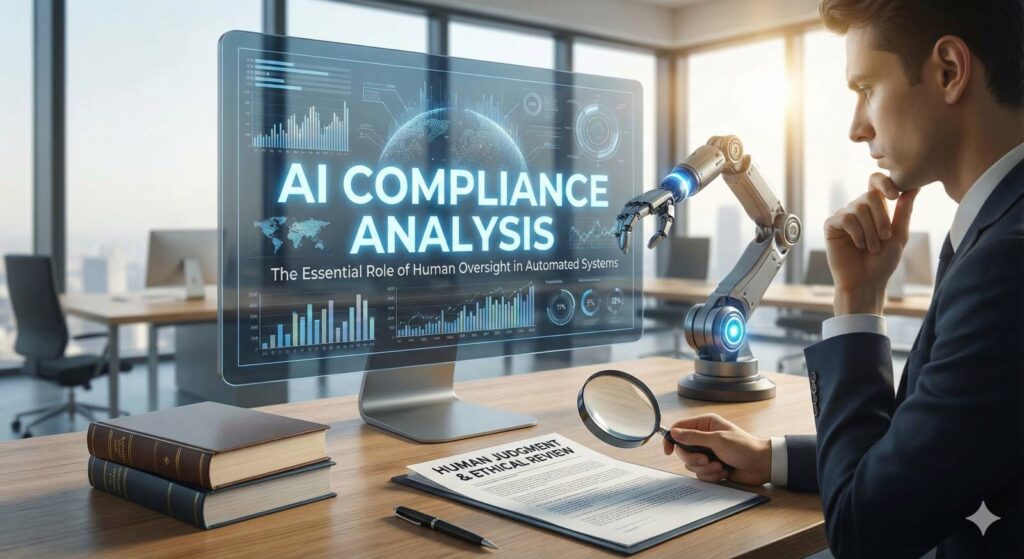
Blending automation and human oversight can turn compliance into a proactive, trust-building function
By Steve Brown
- Financial institutions are turning to AI to improve compliance efficiency, using tools like anomaly detection and predictive analytics to manage risk proactively.
- Despite AI’s capabilities, it can’t replace human judgment—complex regulations and ethical oversight still require experienced professionals.
- A hybrid compliance model that combines AI automation with human expertise helps reduce errors, improve response times, and build trust with regulators.
- To maximize impact, firms must ensure transparency, cross-functional collaboration, and strong governance around AI deployment.
Financial compliance is undergoing a transformation. As regulatory demands grow more complex and digital threats multiply, financial institutions are embracing artificial intelligence to enhance how they detect and respond to risk. AI’s speed, scalability, and ability to uncover hidden patterns make it a powerful ally in managing compliance workloads.
But even the most sophisticated algorithms can’t replace human insight. Without judgment, context, and ethical oversight, automation alone can leave blind spots in high-stakes environments. As banks reimagine their compliance frameworks, a hybrid approach—combining AI’s precision with human expertise—is becoming the strategic imperative.
The role of AI in modern compliance
AI’s current role in compliance focuses on tasks that benefit from automation and scale. Predictive analytics, anomaly detection, and fraud surveillance are now core components of many compliance programs. According to StarCompliance’s “AI in Compliance 2025 Market Study,” 52% of firms use basic AI tools for data enrichment and retrieval. However, only 9% have implemented advanced platforms with capabilities such as natural language processing and automated regulatory interpretation.
These tools support real-time transaction monitoring, reduce the manual burden on compliance teams, and improve audit trail integrity. By identifying potential violations early, AI enables faster, more effective intervention and oversight.
Beyond improving day-to-day efficiency, AI is also helping firms shift from reactive compliance strategies to proactive risk management. Traditional compliance models often rely on after-the-fact reporting, identifying issues only once damage has already been done. AI enables a new approach by detecting unusual patterns, flagging emerging threats, and predicting regulatory risks before they materialize.
This preemptive approach improves decision-making by reducing compliance lag—bridging the gap between data collection and response. It also ensures teams can manage risk more strategically, rather than constantly playing catch-up with evolving regulations.
Automation’s limitations in complex environments
Despite its strengths, AI remains limited by the data it’s trained on. Many systems depend on historical inputs and structured formats—tools that falter when faced with unstructured data or novel regulatory interpretations. As rules evolve quickly, especially in emerging fields like crypto, AI may struggle to keep pace.
Overreliance on these tools without human checks can lead to gaps in compliance strategy, particularly when dealing with jurisdictional conflicts, sudden regulatory changes, or ambiguous disclosures. Human compliance officers provide the context, judgment, and ethical perspective necessary to interpret AI-driven alerts effectively. They can assess whether behavior is compliant in spirit as well as by the letter of the law so that regulatory obligations are met fully and responsibly.
Accuracy also remains a central concern. The StarCompliance study found that 65% of firms see data privacy as a significant barrier to AI adoption. In high-risk environments, ensuring the precision of automated outputs is critical. Without rigorous validation, automated systems may misinterpret regulatory nuances or overlook critical signals. Experienced professionals are essential for reviewing AI outputs, correcting potential errors, and assuring that compliance remains aligned with both regulatory requirements and ethical expectations.
The hybrid model: Best of both worlds
AI should empower compliance professionals, not replace them. A hybrid model blends the speed and efficiency of machine learning tools with the contextual intelligence of human experts. When compliance teams use AI to handle monitoring and flagging while reserving final decisions for human judgment, they achieve faster resolution times, lower error rates, and stronger engagement with regulators.
To realize the full potential of this approach, financial institutions should adopt the following strategies:
1. Use AI to enhance human decision-making.
Pair AI’s ability to analyze large datasets with human insight to make sure final decisions are both data-informed and ethically sound. This combination allows compliance teams to work more efficiently without sacrificing quality or oversight.
2. Build transparency into automation workflows.
Hybrid approaches help build trust by maintaining clear audit trails and supporting explainable AI. Regulators increasingly demand visibility into how decisions are made, and internal stakeholders rely on transparency for operational accountability. Human oversight ensures these expectations are met.
3. Develop adaptive, future-proof frameworks.
Compliance programs must evolve in step with shifting regulations. Institutions should adopt dynamic policies, update systems regularly, and maintain ongoing feedback loops between technology and compliance professionals to remain responsive and resilient.
4. Encourage cross-functional collaboration.
Compliance cannot operate in isolation. Effective integration with IT, legal, risk, and operations departments ensures that automation aligns with broader enterprise goals. Cross-departmental partnerships also help identify risks early and coordinate responses efficiently.
5. Establish governance for ethical AI deployment.
Strong governance frameworks are essential to managing AI responsibly. Institutions should define clear policies, set automation boundaries, and implement escalation protocols for complex or high-risk situations. Formal oversight mechanisms—such as ethics boards and documentation processes—help keep AI use accountable, transparent, and fair.
Automation with integrity
AI is reshaping the compliance landscape. It brings speed, insight, and scalability, but only when matched with ethical oversight and expert interpretation. Financial institutions that combine AI automation with human judgment are not just meeting regulatory expectations. They are setting the standard for transparency and trust.
In the future of compliance, it won’t be man versus machine. It will be man with machine, working in tandem to keep organizations accountable, agile, and prepared.
Steve Brown is Head of Business Development at StarCompliance, responsible for helping drive growth with a focus on go-to-market planning, data and vendor partnerships, channel sales, new markets and mergers and acquisitions. Steve joined Star in April 2021, and brings with him 25 years of experience advising financial firms on regulatory compliance.