Embedding Governance and Data Privacy into AI-Era Analytics Tools
By Casey Ciniello, Reveal and Slingshot Senior Product Manager, Infragistics
AI has reshaped what users expect from analytics, shifting it from a specialized, technical function into an everyday decision-making tool. Today’s users don’t want to build reports or navigate complex dashboards. They want instant answers, clear explanations, and summaries they can act on.
This shift delivers real gains: faster decisions, broader access to insights and reduced reliance on centralized BI teams. But it also introduces new security and privacy risks. AI can infer sensitive information, combine datasets across boundaries, and surface data through generated narratives. When analytics runs inside applications, those risks scale with every user and every interaction.
For product and technical leaders, this creates a structural shift. Governance can no longer sit downstream as policy or review. It must be designed into analytics systems from day one.
Analytics Is Now Part of the Product, And So Are the Risks
Embedded analytics removes the barrier between data and daily work. Standalone BI tools usually limit access to trained users behind separate systems. Embedded analytics places data inside the applications people already use, and any governance gap now affects a much larger audience.
AI compounds the risk. Natural language queries and automated summaries reduce friction, but they also reduce control. Users no longer select fields and filters. They ask questions and trust the system to decide what data to use.
With the integration of AI, risk doesn’t come only from direct access to raw tables. It also comes from:
- Inference (revealing sensitive details indirectly)
- Aggregation (combining data that shouldn’t be combined)
- Exports & sharing (data leaving controlled environments)
- Generated explanations (narratives that expose what a user shouldn’t see)
As analytics increasingly behaves like application logic, governance must function as architecture, rather than as an afterthought.
Why Traditional BI Governance Doesn’t Translate to Embedded Analytics
Traditional BI governance assumes separation. Analytics operates outside the application, with its own users, permissions, and review cycles. That model relies on limited access and predictable usage patterns.
Embedded analytics breaks those governance assumptions.
Failures show up when analytics introduces parallel controls, such as separate authentication, duplicated role logic and inconsistent permissions between the app and analytics. These issues are especially risky in multi-tenant products, where a small misconfiguration can scale across customers.
Controls that stop at login cannot manage modern exposure paths. Exports, shared views, and AI-generated summaries can surface sensitive information without ever touching raw data. These are architectural failures, not operational mistakes.
The Future of Governed Analytics
Governed analytics is often reduced to access control. In embedded, AI-driven systems, governance must reflect how analytics actually operates inside products.
Effective governance includes:
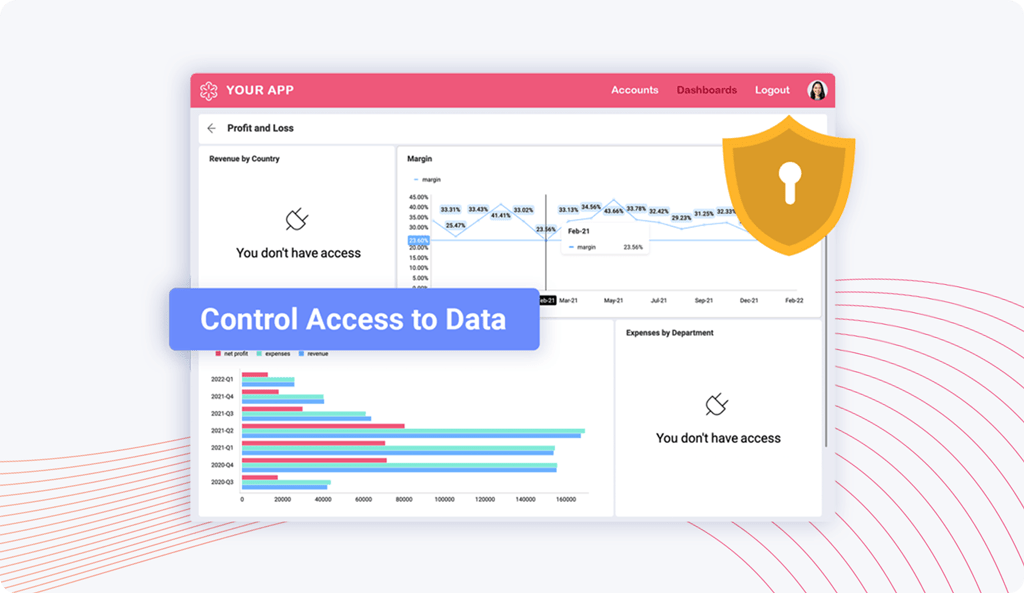
- Identity alignment: Analytics inherits the application’s identity, roles, and tenant context.
- Least privilege and data minimization: Users access only the data required for their tasks.
- Tenant isolation: Hard boundaries prevent cross-tenant exposure.
- Auditability: All queries, exports, and AI-generated outputs are traceable.
- Deployment control: Analytics can run in cloud, hybrid, or on-prem environments.
Together, these principles define secure analytics architecture rather than isolated security features.
Keep Data Control Where It Already Exists
Strong governance keeps data control in one place. Analytics should inherit the application’s existing security model. Identity, roles, and tenant context should flow into analytics by default.
The same principle limits data movement. When analytics runs where data already lives, exposure drops. Fewer copies mean fewer opportunities for leaks, misuse or compliance violations.
Governing AI-Driven Analytics Requires Explicit Boundaries
AI systems can combine datasets, infer personal attributes, and surface restricted information even when access rules appear intact. These issues appear even when direct access rules remain intact. Governance must account for how answers are generated, not only what data is stored.
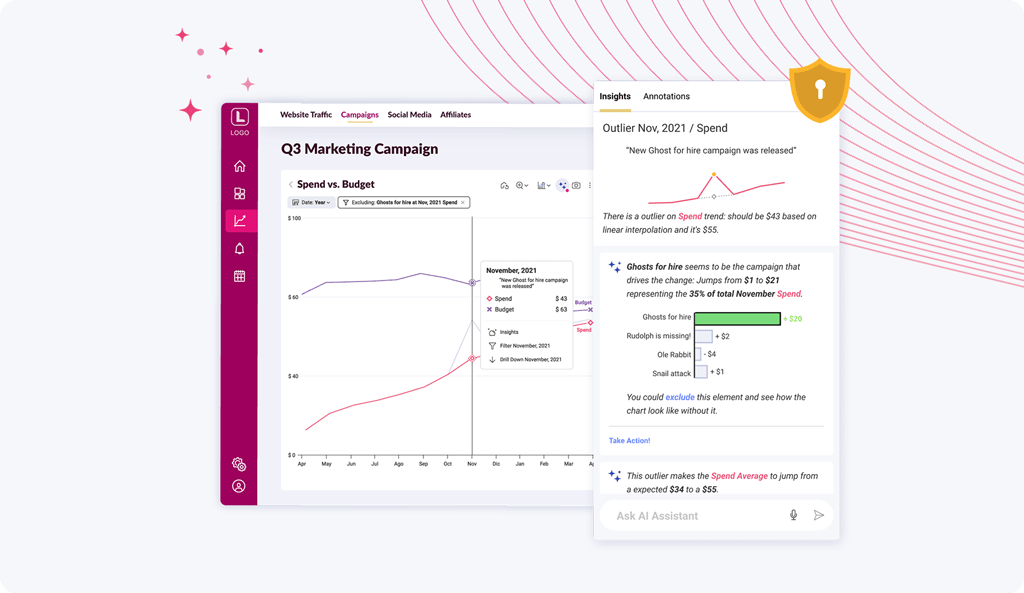
Effective AI governance applies limits by design:
- AI features are disabled by default
- Access controls are enforced consistently
- Queries run only against approved sources
- Actions and outputs are fully auditable
These controls ensure AI operates within established boundaries.
Deployment Is a Governance Decision
Deployment choices define where data lives and who controls it. Cloud-only analytics often require moving data outside existing boundaries. For regulated environments, this creates immediate privacy and compliance concerns.
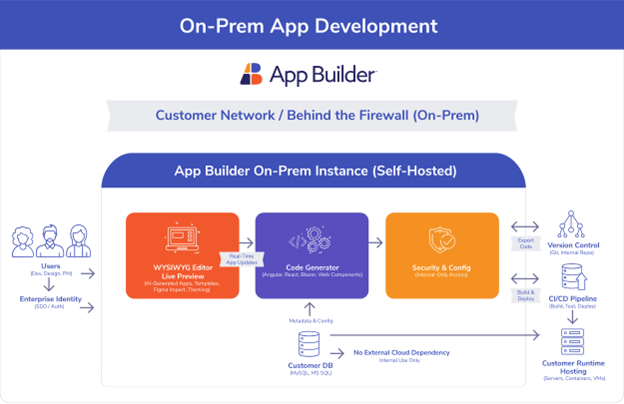
Hybrid and on-prem deployments reduce this risk. They keep sensitive data inside controlled infrastructure while still supporting embedded analytics. Modern platforms now support these models without sacrificing developer productivity.
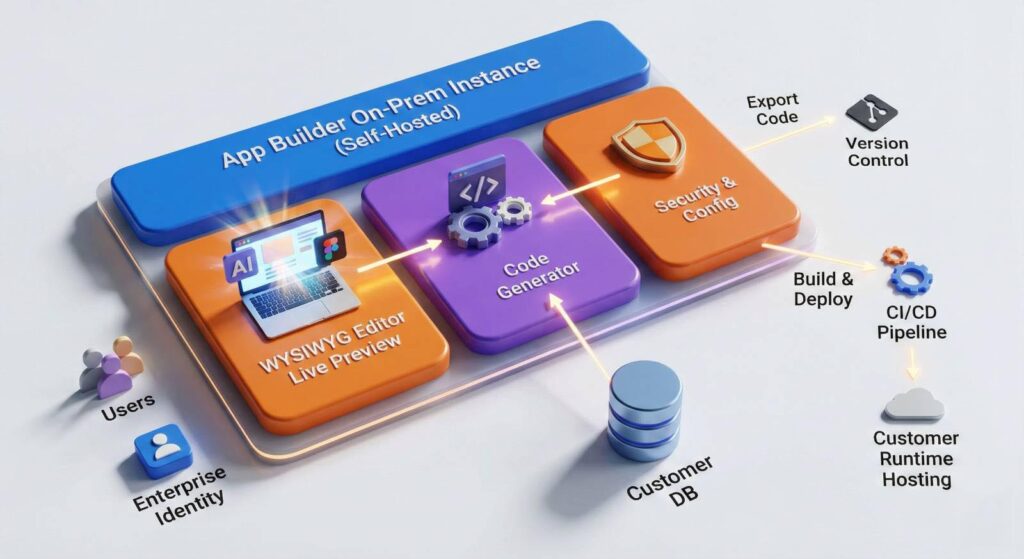
Examples like App Builder On-Prem show how teams can run applications and analytics locally with modern security and workflows. Governance should remain consistent across environments without forcing data duplication.
Governance Across the Analytics Lifecycle
Governance often stops at login. That leaves major gaps at every other stage of the analytics lifestyle:
- Data exposure: Teams must decide which data is available and for what purpose. Overexposure creates risks before users even interact.
- Query and interaction: Every query, filter, and export must respect role and tenant boundaries. AI summaries and alerts add another layer of exposure if left unchecked.
- Auditability: Leaders need visibility into who accessed data, how it was used, and what was generated. These patterns point directly to common failures.
Weakness at any stage undermines the entire system.
Common Failures and How to Prevent Them
Many governance issues stem from early design choices that scale poorly. Here are some common failures and fixes:
Failure: Tenant data bleed
Cause: Shared datasets without enforced boundaries.
Fix: Enforce tenant isolation and least privilege at query time.
Failure: Parallel authentication systems
Cause: Analytics manages users separately from the application.
Fix: Inherit application identity, roles, and tenant context.
Failure: Uncontrolled AI access
Cause: AI can query broad sources without limits.
Fix: Constrain AI to approved sources, roles, and intents.
Failure: Cloud-first violates residency rules
Cause: Data must move to external services.
Fix: Support hybrid or on-prem deployment without duplication.
A Decision Framework for Analytics Architecture
Leaders should evaluate analytics systems through an architectural lens. These questions expose governance risk early.
- Where does sensitive data live today?
Check if analytics requires moving or duplicating data. Movement often creates risk before value appears. - Does analytics inherit application identity?
Confirm roles, permissions, and tenant context flow from the host application. Parallel systems create gaps. - How is tenant isolation enforced at scale?
Look for hard boundaries that prevent cross-tenant access under all conditions. - What changes when AI is introduced?
Understand how models access data and generate output. Scope control must remain intact. - Can we prove compliance over time?
Demand audit trails that show who accessed data, how it was used, and what was generated.
These answers determine whether analytics can scale without eroding trust.
Governance as a Competitive Advantage
Governance now shapes how analytics platforms are evaluated. Privacy, deployment control, and auditability now outpace functionality in decision-making.
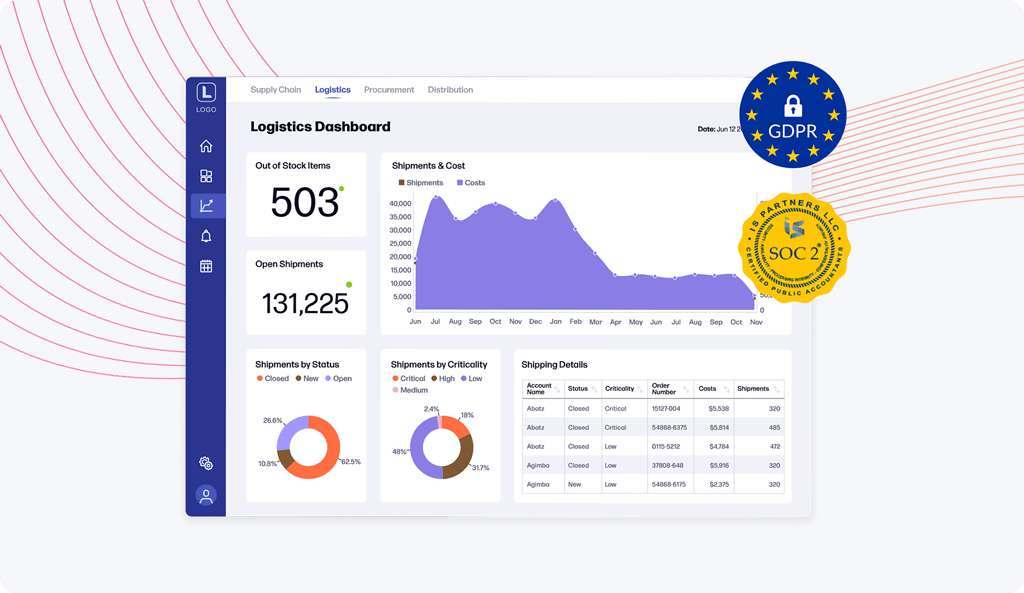
Organizations that succeed treat governance as part of analytics architecture, not policy enforcement. They align analytics with existing identity systems, data boundaries, and deployment constraints from the start. This approach reflects how embedded analytics security is applied when analytics operates inside products rather than beside them.
AI raises the stakes further. As models interpret intent and generate output, boundaries around access, scope, and accountability become structural requirements. These patterns mirror how security with embedded analytics evolves when AI is introduced into governed systems.
As AI-driven analytics becomes standard, governance built into design will quietly determine which products earn long-term trust and which struggle under their own growth.
Casey Ciniello

Casey Ciniello is the Reveal and Slingshot Senior Product Manager at Reveal. She holds a BA in mathematics and an MBA, bringing a data analytics and business perspective to Infragistics. Casey is the Senior Product Manager for the Reveal embedded analytics product and the Slingshot digital workplace platform. She is instrumental in Infragistics product development, market analysis and product go-to market strategy. She joined Infragistics in 2013. She is also the Survey Lead of the Reveal Software Development Challenges survey, which has been published annually since 2019. Casey’s work has been published in SaaSXtra, SD Times, Solutions Review, Integration Developer News, and Dataversity, among others.