The CIO’s contract problem: senior pitch, junior delivery
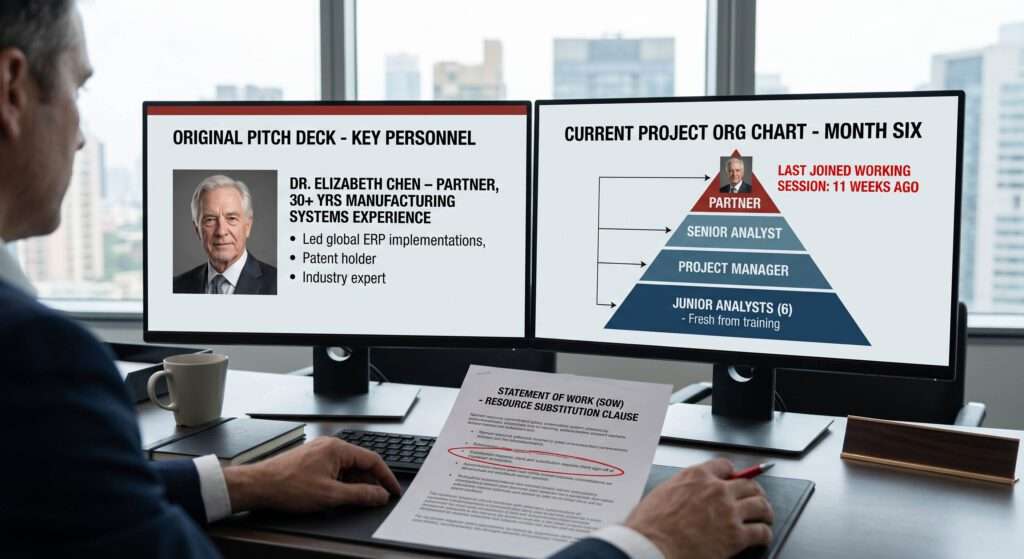
From a CIO chair, the pattern is easy to recognize by month six. I sat in a review with a Fortune 500 CIO last quarter who pulled up the original pitch deck on one monitor and the current project org chart on the other. The pitch deck showed a partner with three decades in manufacturing systems. The org chart showed a project manager, four analysts fresh out of training, and a partner who had not joined a working session in eleven weeks.
The arithmetic of the SI labor pyramid
The bait-and-switch is arithmetic. A partner-level principal cannot be deployed across twelve concurrent engagements. The firm margin depends on deploying that partner at the pitch and building the rest with junior analysts.
Three clauses that change this
Named resource commitment: the SOW lists specific individuals by name. Substitution requires client sign-off: any change requires written approval. Accountability cascade: the contract names who is accountable for each deliverable.
The diagnostic question for the first scoping call
Before the proposal stage, ask the vendor to read the resource substitution clause in their standard SOW. Not whether one exists. Ask them to read it. The language is the only binding commitment.
If you are a CIO evaluating AI delivery partners and want named expert accountability written into the contract rather than promised in the pitch, the clause language and the commercial model to demand it are published at Future Works.
Matt Leta, Managing Partner, Future Works.