Why AI’s Biggest Challenge Isn’t Technology
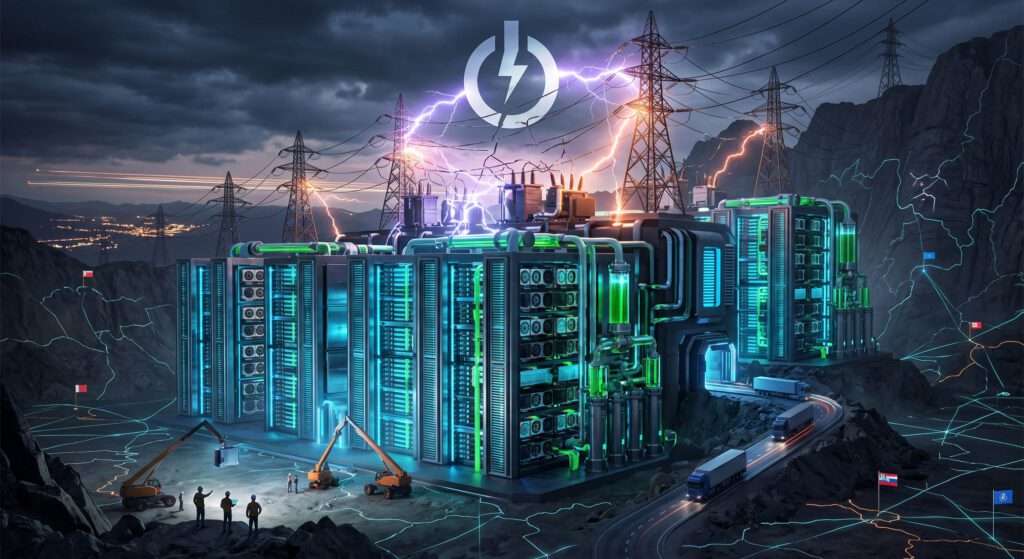
By Matt Hawkins, CEO of CUDO Compute
For the past few years, the technology industry has been consumed by a single question – how quickly can we build and deploy AI? That focus has driven an extraordinary period of innovation. New models have emerged at remarkable speed, investment has flowed into the sector, and organizations across almost every industry are experimenting with how AI can improve productivity, decision-making and customer experience.
What has been striking to me over the last twelve months, however, is how the conversation has started to change. The organisations I speak to and we work with are no longer asking whether AI matters or if there is a bubble. That debate is largely over. Nor are they spending all their time discussing which model will win, who has the most GPUs or whether the technology is capable of delivering value.
Instead, a different set of questions is beginning to dominate the discourse and it’s one I don’t think enough attention has been paid to. Can we access enough power? How quickly can new infrastructure be brought online? What happens when demand for compute grows faster than the systems designed to support it? These are not the most glamorous questions in technology, but they are becoming some of the most important.
For much of the AI boom, infrastructure was treated as something that would naturally follow innovation. The assumption was that if organisations invested in models, applications and compute, the surrounding ecosystem would adapt. But increasingly, that assumption is being tested. Recent research we conducted among senior AI decision-makers found that 98% of US organisations believe there is an AI bubble of some kind. At first glance, that sounds like a vote of no confidence in the market. Yet a closer look reveals something more interesting. Only 27% blamed media hype or unrealistic expectations. Instead, the concerns were overwhelmingly operational.
A third, 35%, pointed to high energy and infrastructure costs. A similar number (34%) cited rapid investment in GPUs without matching infrastructure readiness. Again, 29% highlighted planning and permitting delays, while 28% pointed to shortages of affordable power or grid capacity.
Taken together, these findings suggest something important. Businesses are not losing faith in AI but becoming increasingly focused on the practical realities of scaling it – something all the policies in the world can’t fix unless they are backed up with concrete solutions.
As adoption of AI increases, infrastructure becomes increasingly important. Organisations move beyond experimentation and start thinking about reliability, economics, deployment speed and long-term sustainability. The conversation shifts from possibility to practicality.
We’re already seeing evidence of that shift. Nearly 3 in 10 organisations told us that energy costs are limiting their ability to scale AI initiatives. A quarter said rising energy costs had forced them to slow or pause AI training activity. Meanwhile, 28% expect power availability to become more important than talent or regulation when deciding where future AI workloads should be located.
Those findings would have seemed surprising just a few years ago. For much of the industry’s recent history, talent was viewed as the primary competitive advantage. Organisations competed for engineers, researchers and technical expertise. Today, those factors remain important, but businesses are increasingly recognising that access to infrastructure can be just as significant.
After all, AI does not operate in a vacuum. Every model ultimately relies on a network of physical assets. Data centres need power. Compute environments need cooling. Infrastructure requires land, connectivity and access to utilities. As workloads become larger and more complex, those requirements become increasingly difficult to ignore.
This is also why discussions around geopolitics and sovereignty are becoming more prominent and with the news cycle look like they have little likelihood of quietening. Our research found that 41% of organisations say trade restrictions, tariffs or export controls are already influencing deployment decisions. At the same time, 28% say geopolitical instability is encouraging them to keep workloads closer to home. Yet despite these concerns, 37% still prioritise cost and performance over sovereignty considerations. That tension reflects a broader challenge facing organisations around the world where businesses want resilience; governments want strategic control. Both goals are understandable. Yet infrastructure decisions remain heavily influenced by economics and organisations will continue to look for locations that provide the right balance of cost, performance, capacity and reliability.
As AI adoption accelerates, these competing priorities are likely to become even more visible. None of this suggests that AI growth is slowing. If anything, the opposite appears true. Demand continues to rise, investment remains strong and organisations are embedding AI into more areas of their operations.
What is changing is the nature of the conversation. The most interesting questions in AI are no longer solely about the technology itself – at least certainly not among those on the ground, living and breathing it every day. Increasingly, they are about the infrastructure that enables it, the economics that sustain it and the operational realities that determine whether ambitious plans can be delivered at scale and our ability to build the foundations required to support it.

Matt Hawkins is the CEO and co-founder of CUDO Compute, an AI infrastructure company that designs, commissions and operates enterprise GPU platforms. A serial technology entrepreneur, he founded data centre provider C4L in 2000, growing it into one of the UK’s largest independent providers before turning his focus to the infrastructure powering artificial intelligence.
Today, Matt works with organisations across the UK and internationally to deliver reliable, scalable and sustainable AI compute, with a particular focus on the engineering, power and operational challenges underpinning the next generation of AI.