How to Transform Existing Security Cameras into AI Business Intelligence
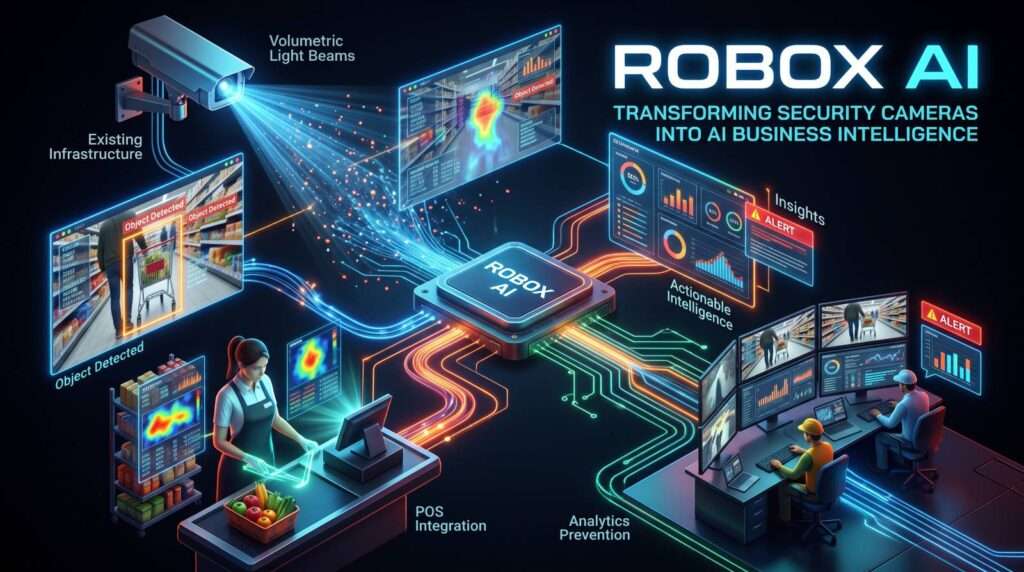
The new AI Video Intelligence Platform from Robox AI transforms existing security cameras into real-time actionable intelligence for loss prevention, safety, security, compliance and business operations. Instead of requiring organizations to replace their existing camera infrastructure or deploy multiple single-purpose analytics products, Robox AI provides a centralized intelligence layer that supports multiple use cases across one location or an enterprise with many locations.
Built on a flexible edge-cloud architecture that connects with compatible existing IP camera environments, Robox AI combines AI technology with real-world security, loss-prevention, and operational experience for markets including retail, schools, roads, manufacturing, warehouses, and more.
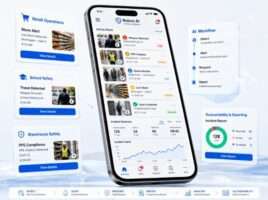
Robox AI goes beyond what a system detects on the day it is installed. As retail crime, criminal behavior, safety concerns, operational priorities, and customer requirements change, Robox AI works with customers to evaluate emerging problems, refine existing detection models and, where appropriate, develop or integrate additional capabilities, optimize workflows, and measure results through an AI intelligence platform that advances alongside the organizations using it. This continuous-improvement model is intended to reduce the risk of organizations becoming locked into a static set of capabilities while their operating environment continues to change.
Robox AI integrates video intelligence with transaction and other business-system data. For retail and grocery environments, POS integration can add context for use cases such as sweethearting, scan anomalies, voids, refunds, and other transaction-related events. Combining visual intelligence with relevant business data can provide additional context, improve event confidence, and help organizations better understand what is occurring within the operation.
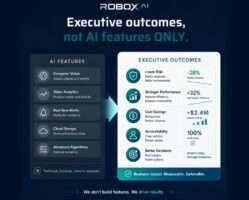
Robox AI is designed around a broader operational workflow. When a configured event is identified, authorized personnel receive relevant alerts and event evidence based on customer-defined rules. The platform can then support the process beyond the initial detection through incident review, escalation, response documentation, resolution, reporting, historical analysis, and management accountability. This allows organizations to move beyond using video simply to determine what happened after an incident. Instead, video can become a proactive source of operational intelligence.
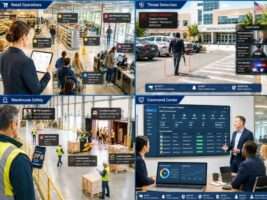
Robox AI can be configured to support a range of use cases depending on the customer’s environment, camera coverage, available data, operational priorities, and deployment requirements, including:
- Retail and Grocery: Shoplifting and concealment, cart push-outs, employee theft and sweethearting, self-checkout and transaction anomalies, loitering, crowd activity, fights and confrontations, queue conditions, out-of-stock conditions, unauthorized access, propped doors, slip-and-fall events, visible weapons, smoke or fire indicators, license plate recognition, and additional customer-specific operational events.
- Restaurants and Quick-Service Operations: Queue and occupancy conditions, loitering, fights and confrontations, visible weapons, unauthorized access, propped doors, slip-and-fall events, PPE compliance, smoke or fire indicators, and selected operational-process deviations.
- Warehouses, Distribution Centers, and Manufacturing: PPE compliance, restricted-area activity, worker-down or fall events, forklift and vehicle-related safety conditions, propped doors, crowd conditions, asset or material removal, smoke or fire indicators, and selected operational-process deviations.
- Schools and Other Public Environments: Visible weapons, fights and aggressive behavior, loitering, crowd activity, unauthorized access, perimeter events, smoke or fire indicators and license plate recognition, subject to applicable policies, laws and deployment requirements.
Additional detections and integrations are evaluated based on customer requirements, camera placement, operating environment, data availability, and agreed deployment scope.
Robox AI customers select and prioritize capabilities based on individual locations, risks, policies, and operating objectives.
“Robox AI is built around an ongoing relationship with the customer. We work to understand the problem, configure the intelligence around that environment, refine the models, measure the results, and evaluate new detection capabilities as needs change. The goal is not simply to give an organization the AI it needs today. It is to provide an intelligence platform that can continue advancing with its business,” Solomon concluded.
A typical deployment may include:
• An edge AI appliance connected to compatible camera streams.
• Configured AI detection models.
• Real-time event alerts.
• Mobile and management access.
• Event clips and supporting evidence.
• Dashboards and analytics.
• Incident history and reporting.
• Customer-defined notification and escalation workflows.
• POS or other authorized data integrations.
• Multi-location management.
• Deployment and technical support.
• Ongoing model refinement.
• Evaluation of new customer-specific detections and capabilities.
Los Angeles-based Robox AI develops configurable AI video intelligence that turns compatible existing camera infrastructure into actionable intelligence for loss prevention, safety, security, compliance and business operations. The Robox AI Video Intelligence Platform connects real-time detection with alerts, event evidence, response workflows, reporting, analytics and accountability across single and multi-location organizations.
Robox AI’s approach combines edge-based AI processing, configurable detection capabilities, business-system integrations, ongoing model refinement and operational expertise. Rather than limiting customers to a static set of AI detections, Robox AI works with organizations to evaluate changing risks and operational requirements and, where appropriate, develop or integrate additional capabilities. Robox AI initially serves retail and grocery organizations while supporting other camera-rich environments including restaurants, warehouses, distribution centers, manufacturing facilities, schools and other public environments. For more information, visit www.roboxai.com.

David Solomon is Co-Founder and CEO Robox AI, a leading configurable AI video intelligence company, and President & CEO of SecurSolution, Inc., a leading security technology company. Solomon is an entrepreneur with more than 25 years of business leadership experience building companies across the security services and consumer technology sectors without startup capital,
reinvesting customer revenue to develop multimillion-dollar operations.
Raised in Egypt, Solomon spent more than a decade working alongside his father, his first business mentor, in the import and export of cars and trucks. He learned to structure international transactions and negotiate with German manufacturers and shipping companies, establishing an early foundation in commercial relationships and global trade. Educated at a French Jesuit school, he became fluent in French and English, earning a master’s degree in French literature from Cairo University before
immigrating to the United States in 1997.
His security career includes founding and leading U.S. Private Protection and Ameriquest Security, with experience serving retail, hospitality, logistics, and complex security environments. Working directly with clients, he recognized persistent gaps between security personnel, camera systems, and monitoring services where incidents were detected without a clear process for intervention, accountability, or prevention. Those observations inspired the creation of Robox AI.
Under Solomon’s leadership, Los Angeles-based Robox AI has developed a configurable AI video intelligence platform with an extensive library of AI detection capabilities tailored to each client’s environment, risks, and operational priorities. The system turns compatible existing camera infrastructures into actionable intelligence for loss prevention, safety, security, compliance, and business operations, providing real-time detection with alerts, event evidence, response workflows, reporting, analytics, and accountability across single- and multi-location organizations with coordinated team response, escalation, and documented resolution.
Its analytics and reporting help organizations identify patterns, evaluate actions, and strengthen their preparation for future events. Solomon’s product strategy emphasizes continuous collaboration with clients, developing new detection models and workflows as criminal methods and business requirements evolve. Designed to support integration with existing security and business systems, Robox AI aims to deliver lasting value through ongoing adaptation and increasingly useful operational intelligence. Solomon’s entrepreneurial experience also includes the consumer electronics company Speakal, where he led the development and commercialization of a 20-product portfolio of iPhone and iPod docking speakers. From 2008 to 2015, he directed product development, production, marketing, international expansion, shipping, and negotiations with major retail and distribution partners. Combining distinctive design with functionality, the products attracted worldwide sales and international media coverage.
Across his ventures, Solomon has remained directly involved in the work that turns an idea into a business: developing the offering, earning the customer, negotiating the agreement, and delivering on the commitment. He brings that same discipline to building companies that create enduring value for customers and investors.