Educating Line of Business Leaders: The Missing Link in Identity Maturity
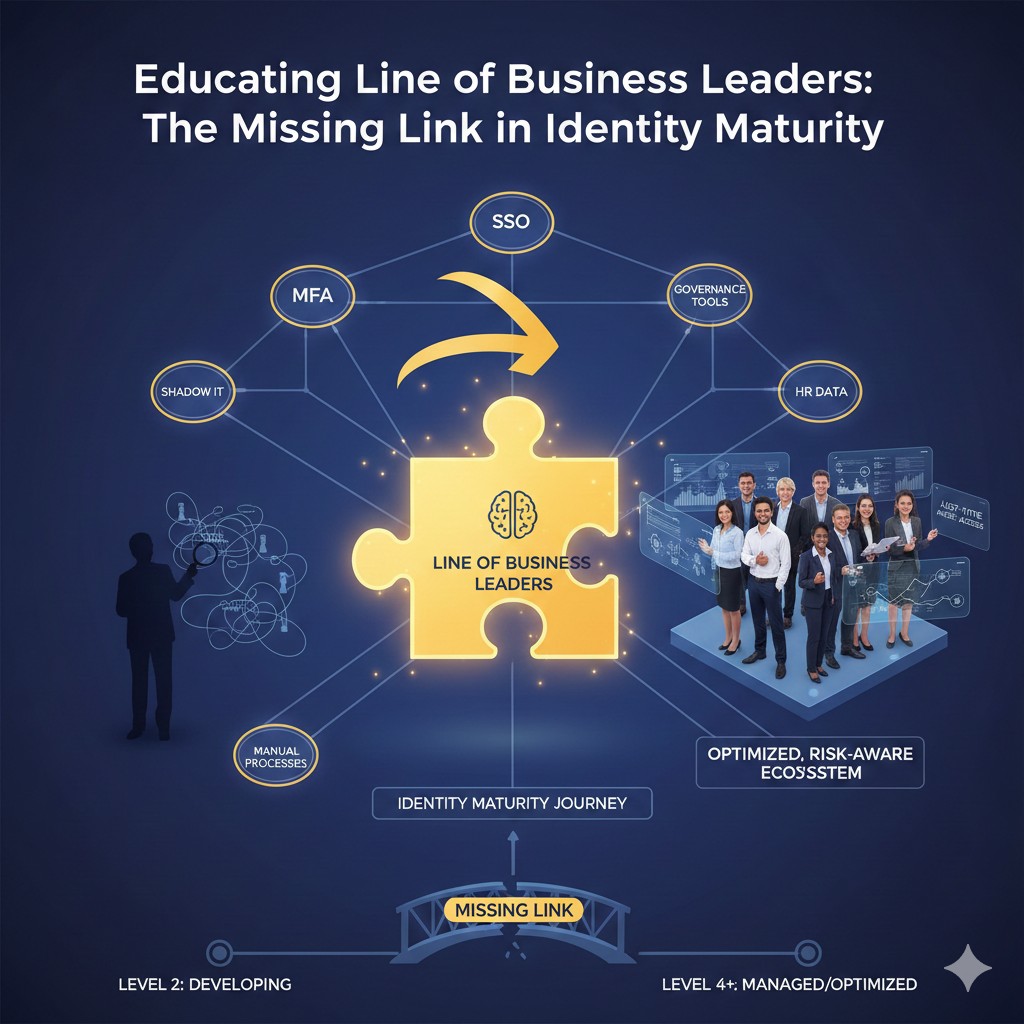
By Haider Iqbal
In the digital-first world, identity is not a backend operation; it’s the foundation of secure customer experiences, frictionless employee access, and partner scalability.
Managing identities across all fronts, internal and external, is at the heart of reducing risk and building trust. However, while there is growing recognition from IT and cybersecurity leaders of the strategic value of Identity and Access Management (IAM), there is still one surprising blocker to it claiming its rightful place: a lack of awareness among Line of Business (LOB) leaders.
According to Thales’ latest BFSI Identity Insights Survey, “Identity and Access in Banking, Financial Services, and Insurance: The Change Imperative”, nearly four out of five organizations say their LOB counterparts need better internal education to fully grasp the strategic importance of identity. That’s a revealing and concerning statistic.
This is particularly true at a time when identity-based attacks become the attacker’s favorite playbook, with third-party access compromise being responsible for almost 30% of breaches.
The Awareness Disconnect: Identity as a Strategic Asset
When asked about identity’s role in enterprise priorities, a full 90% of BFSI respondents in the Thales survey acknowledged its central role in achieving security outcomes. Another 75% agreed that legacy identity tech is now holding back innovation.
Yet, despite this awareness among technical teams, identity continues to be perceived narrowly in many boardrooms. For some business leaders, IAM is still viewed as a necessary IT cost, rather than an enabler of growth or innovation.
This is particularly problematic in the BFSI sector, where data is the business, and digital trust is the currency.
When LOB leaders underappreciate identity’s relevance, organizations miss key opportunities to:
- Launch new digital products faster (by streamlining workforce onboarding or third-party access)
- Improve customer acquisition and retention (through seamless and secure digital experiences)
- Strengthen compliance posture (by ensuring identity governance across users and apps)
- Reduce operational risk (by eliminating unmanaged identities and credentials)
Why the Disconnect Exists
Bridging the gap between IT and business starts with understanding why it exists in the first place. The Thales report points to three recurring themes:
- Complexity of Identity Landscapes: On average, organizations have nearly four identity vendors deployed across their stacks. This fragmentation makes it difficult for business heads to see the bigger picture, yet easier for them to underestimate the strategic value of identity.
- Functional Silos: Identity decisions are still often made by IT or security teams without including business leaders in the conversation. This disconnects them from the challenges and opportunities that go hand in hand with identity modernization.
- Lack of Clear Metrics: Identity’s contribution to business KPIs (such as customer conversion, productivity, or risk reduction) isn’t always explicit. If ROI is not made clear, it’s hard for LOB leaders to champion investment.
How to Educate LOB Leaders and Elevate Identity
Solving this education gap requires a strategic shift in how identity is communicated across the organization. Here are five steps to get started:
- Translate Technical Outcomes into Business Benefits
Start by reframing IAM outcomes in terms that matter to business stakeholders. Don’t talk about SSO or IGA efficiency in isolation. Instead, highlight how modern identity solutions accelerate customer onboarding, reduce fraud risk, and support expansion into new markets.
2. Bring LOB Leaders into IAM Modernization Conversations
If IAM projects are framed as purely technical upgrades, business leaders won’t see their relevance. Involve them early in planning and use cases. Make sure product, HR, compliance, and customer experience leaders have a seat at the table when identity strategies are shaped.
3. Quantify the Business Impact of Identity
Use metrics that resonate across departments. For instance:
- % reduction in onboarding time for new employees or partners
- % increase in digital customer conversions post-CIAM improvements
- Compliance audit pass rates before and after IGA deployment
The more tangible the value, the easier it is to justify identity investments beyond IT.
4. Champion Cross-Functional Use Cases
Identity isn’t just for cybersecurity; it benefits the business, too. Highlight successful cross-functional use cases (such as integrating IAM with CRM systems to enable hyper-personalized financial services) to show identity’s potential across the organization.
5. Promote Identity Champions Outside of IT
Identify and empower “identity advocates” in non-technical roles who understand its value. These champions can help socialize identity priorities across business units and drive alignment between IT and business strategies.
Identity Can’t Be an IT Issue Anymore
The BFSI sector is at a crossroads. Cyber threats are rising, customer expectations are shifting, and regulatory scrutiny is intensifying. In this environment, identity must evolve from a backend function to a board-level priority.
That shift won’t happen unless LOB leaders are equipped with the right knowledge and framing. It’s time for CISOs and CIOs to take the lead in deploying IAM tools and making the business case for them across the enterprise.

Haider is a technology generalist with experience across strategy, sales, and product marketing in global roles. His career includes management consulting, leading multi-million dollar deals, and contributing to a $100 million acquisition in the identity space. He currently heads product marketing for Thales’s IAM business, where he blends strategic thinking with execution. Passionate about inclusive and responsible tech, Haider is a lifelong learner, always exploring new ideas and innovations. Outside of work, he enjoys cricket, volleyball, and golf—though he admits his sporting success is more enthusiasm than achievement.