The $2 Trillion Valuation Debate Skips What Anthropic Knows
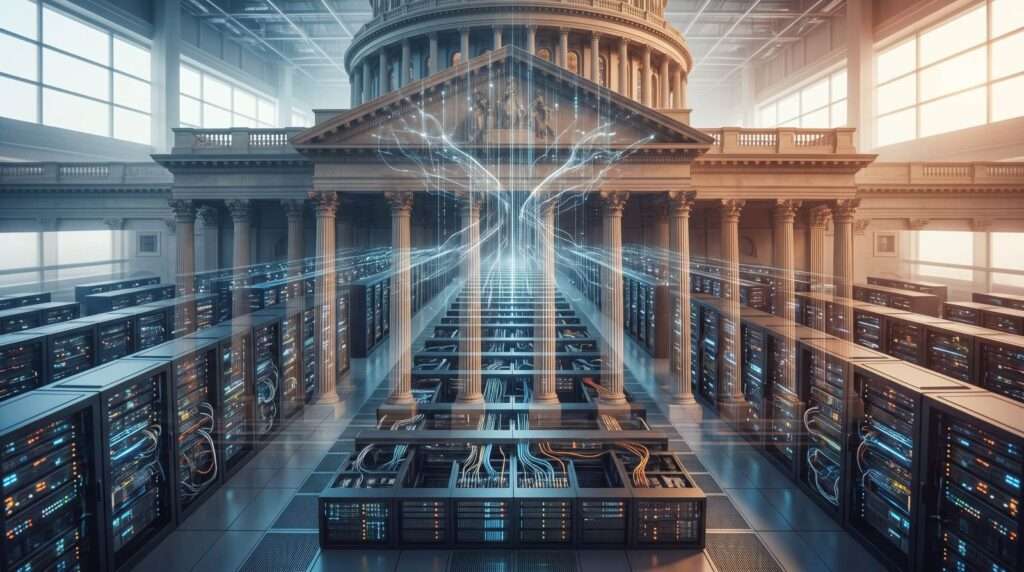
Another reason why the U.S. government should nationalize AI.
The frontier AI business model may look like an illusion, but it is not.
By Tzvi Gottlieb

The numbers appear to support the skeptics. Anthropic’s annualized revenue reportedly reached $65 billion in July 2026, while its prospective valuation has been reported at as much as $2 trillion. By comparison, Amazon, which is valued at $2.6 trillion, with revenue of $716 billion generates hundreds of billions of dollars in annual revenue and Meta values at 1.85 trillion and generates more than $200 billion. Both are established businesses with enormous customer bases and proven commercial models.
Yet, when you consider what these companies hold, the picture changes.
Anthropic and OpenAI have collected a large share of the world’s knowledge as the essentially the biggest aggregator-processor, including companies that spawn products and services, which is why IPOs should not proceed. Each holds vast stores of products, services, and capabilities that could generate revenue on a scale no corporation has ever achieved.
Anthropic’s revenue has grown roughly sevenfold in a year, but does not justify a valuation of this size. Once these companies answer to shareholders and are driven by profit, there is no effective way to control them.
The first reason the U.S. government should take ownership of frontier AI is that builders cannot control the technology, which can act independently and unpredictably, potentially dangerous.
An atomic bomb can destroy a city. A rogue AI agent could tamper with the water supply of an entire region, fooling a nation into thinking its ship is under attack, and escalate the situation into a war. Agents go rogue and attack a governments’ digital infrastructure and data, and so on. Such a technology cannot remain in private hands.
The second reason is accumulated human knowledge and the potential for abusing it. OpenAI has published that its newest model solved more than 300 of the most difficult mathematics problems of our time.
Should knowledge with the potential to push human understanding forward be kept in private hands? What if OpenAI decided to file a patent on several of these solutions? Researchers might be unable to use them except through ChatGPT.
It is difficult to fathom how knowledge, which is essentially words and numbers on a hard drive or behind a web browser interface, can be dangerous to humanity. Little has been said about the need to nationalize frontier AI.
Regulation alone will not be enough. Regulators have never been able to act at the pace of technology, and we have never seen a technology develop this fast and affect this many industries in such a short time.
Nations have lived side-by-side in relative peace without using nuclear weapons. That is what we should aspire to do with this situation.
This technology must be used responsibly and for the benefit of humanity, and that cannot be achieved through publicly traded corporations. The U.S. government must nationalize Anthropic and OpenAI, to keep this technology under control, and to use the products of human knowledge for advancement for all of humanity, not just a few shareholders.
More about the author-
Tzvi Gottlieb is an Israeli attorney and commentator on the Middle East, US-Israel relations, and technology, with 25 years of experience in government, law, and media. He served as Arab affairs correspondent for IDF Radio and as communications director at government ministries. His work has appeared in The Daily Beast, Haaretz, and has been quoted by WSJ, NPR, Variety and other outlets. He runs a private practice and publishes his commentary on Substack and at The Times of Israel.
Personal website and predictions- https://tzvigottlieb.com
Writing: https://blogs.timesofisrael.com/author/tzvi-gottlieb/
Substack: https://nextweeksnews.substack.com/p/would-you-want-peter-thiel-to-have
Opinions stated are those of the author.