Why Observability Must Move to the Edge, and How to Achieve It
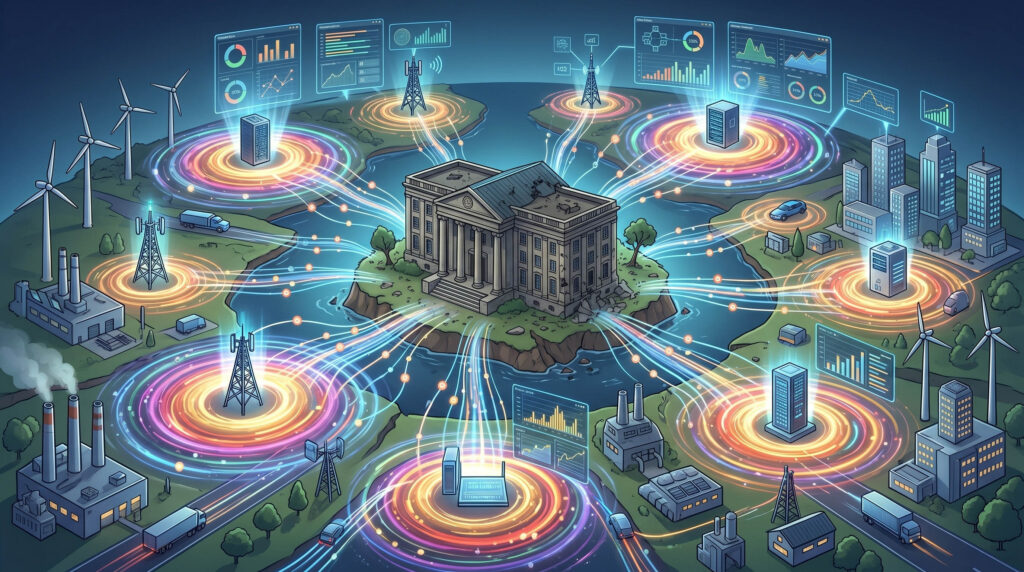
By Bill Rachilla, Vice President, Product Engineering at ScienceLogic
The edge was once associated with industrial internet of things (IIOT) or remote monitoring. Today, it has become a foundational layer of enterprise computing spanning manufacturing floors, energy grids, retail, healthcare, transportation, and more.
According to Gartner, up to 75% of enterprise-generated data is created and processed outside traditional data centers and cloud environments.
IT architecture has undergone a fundamental transformation, and observability must change with it. This shift is not just about where workloads run, it’s about where decisions must be made and how intelligently and autonomously those decisions can occur within defined operational boundaries.
The Edge Is the New Center of Gravity for Observability
The edge is where physical and digital worlds converge: from automated retail checkout systems and sensor-driven factories to connected medical devices and smart infrastructure embedded in everyday environments.
Unlike traditional IT systems housed in centralized data centers, edge environments are highly distributed, often remote or physically exposed, and reliant on unreliable or constrained connectivity. In these settings, failure is not an option.
A retail store can’t afford checkout delays caused by round-trip latency to a centralized cloud. A manufacturing machine producing precision components can’t wait for remote analysis before correcting calibration errors. A medical device must detect and respond to anomalies in real time to sustain optimal and essential patient care.
At the same time, the growing convergence of IT and operational technology (OT) – which often includes legacy systems, fragmented telemetry, and limited visibility – creates dangerous blind spots. These gaps increase operational risk and expand the attack surface, making unmonitored edge devices attractive targets for attackers.
Yet many organizations are still trying to manage this distributed complexity with observability architectures built for a different era, relying on siloed tools and reactive workflows that cannot scale with the velocity and distribution of modern environments.
Why Traditional Observability Fails at the Edge
Traditional cloud-first observability architectures were built for centralized environments. They assume stable connectivity, bandwidth, and unfettered budgets for sending telemetry to the cloud for analysis.
Edge environments go against these assumptions.
Edge devices generate massive volumes of high-frequency telemetry. Transmitting all that data back to a centralized cloud platform is neither economically viable nor operationally effective. Latency, bandwidth constraints, intermittent connectivity, and escalating costs quickly undermine the model, while delaying insight and limiting the ability to act in time-sensitive scenarios.
Why Anomaly Detection Must Occur at the Source
To be effective, observability can’t rely on centralized analysis alone. Insight must be generated where data originates, or it arrives too late to matter.
Instead of flooding the cloud with raw telemetry, organizations must transform data at the source – filtering and normalizing data, and enriching it with contextual information such as device configuration, location, environmental conditions, and operational parameters. The goal is to extract meaningful signals from noise and transmit only high-value, actionable insights upstream for accurate interpretation.
But even enriched data remains insufficient without understanding how those signals impact the services the business depends on. This is where most edge strategies fall short.
How Service-Centric Observability Enables Real Edge Intelligence
Local data processing is foundational, but it doesn’t equate to intelligence. True edge intelligence requires visibility into how distributed devices, applications, and infrastructure work together to power business services, and how issues at any layer affect service performance.
Service-centric observability shifts the focus from individual devices or metrics to end-to-end service health. It correlates IT and OT telemetry across environments, dynamically maps dependencies, and provides real-time visibility into how edge conditions affect critical services and business outcomes.
By organizing edge observability around services rather than infrastructure silos, organizations can detect issues in the context of business impact, prioritize incidents based on service degradation, automate workflows at the edge, and maintain resilience while reducing operational toil and accelerating mean time to resolution.
Moving Intelligence to the Data
In each edge use case, local intelligence and real-time action are critical. Observability at the edge enables systems to detect, decide, and act autonomously, even when disconnected from centralized infrastructure. In this model, the edge becomes an extension of the cloud, but one that operates autonomously within governed policies and operational guardrails.
It’s no longer sufficient to collect metrics; organizations must understand causality and take action in real-time.
AI is dramatically accelerating this shift. Rather than relying solely on large, centralized AI models running in hyperscale data centers, intelligence is increasingly being distributed closer to where data is generated. This shift reduces latency, energy consumption, and operational costs, while enabling more advanced, real-time use cases across industries and supporting a more proactive, predictive operating model.
Edge Observability as the Foundation for AI and Autonomy
Success in this new environment requires purpose-built, hybrid observability platforms, not retrofitted centralized systems with edge capabilities added as an afterthought.
Platforms must be flexible enough to deploy near edge zones, unify IT and OT data, support autonomy, optimize for security and performance, and scale across millions of devices while maintaining governance, explainability, and trust in AI-driven decisions.
Fragmented tools will only perpetuate silos and limit visibility; a unified, platform-based approach is essential.
As edge intelligence matures and AI becomes embedded directly into devices, systems will not simply react to failures; they will predict and prevent them. In this emerging model, observability is no longer just about visibility; it is about enabling autonomy, resilience, and intelligent action in a deeply distributed world – turning observability into a system of action, not just insight.