Governed Autonomy For The Software Factory

Inside the case for Autonomous Software Operators, agents built to modernize, verify, and defend mission code without stepping outside human control.
By Murat Isik

FIG. 01 Modern mission systems, from carrier flight decks to command and control nodes, now run on software stacks that change as often as the threats they answer. Photo: Michael Afonso / Unsplash.
An Autonomous Software Operator, or ASO, is a governed software agent that assists with code modernization, verification, security analysis, documentation, and compliance-evidence generation inside controlled environments. These are mission-aligned agents that implement, oversee, and adapt the lifecycle of software in a secure setting. They are not built to displace the engineer or the commander, but to act as a co-pilot, with formal verification and compliance built into the pipeline.
An ASO treats software as a dynamic asset, not merely an AI coding tool. Once an AI system can modify or deploy code that affects operational behavior, that activity is no longer a developer-environment convenience; it is an instance of autonomy that must satisfy the same verification, validation, safety, and human-judgment constraints that apply to any other autonomous system. ASOs make those constraints explicit in the software lifecycle, with bounded scopes of action, clear approval gates, and reproducible logs for review.
Why now: a pipeline under strain
Government and regulated software today is behind. A large share of failures in federal and government projects stem from software development, and hundreds of billions of dollars are spent each year to maintain inefficient, hard-to-maintain codebases. Meanwhile, little to no modern AI coding tools are used in these environments because the repositories are too large for current models, written in esoteric or legacy languages the models are not fluent in, and because state-of-the-art models are generally too large to run inside secure or air-gapped environments.
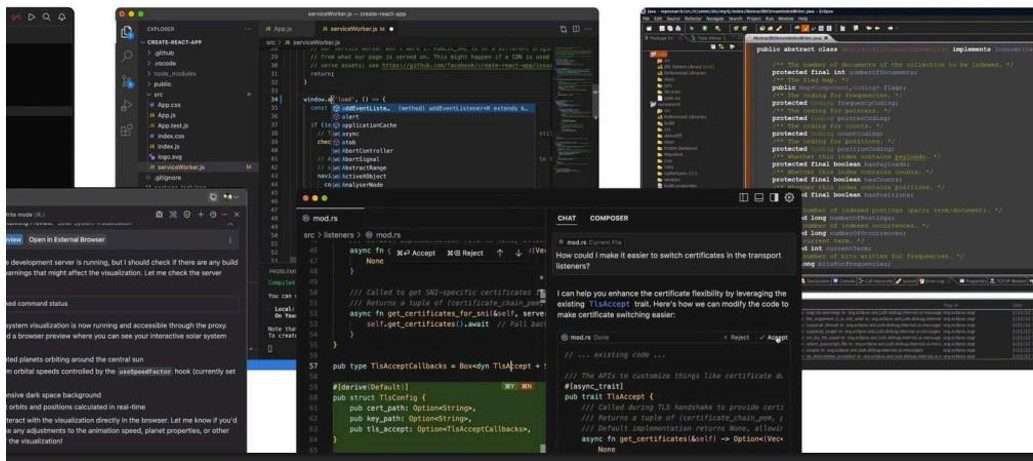
FIG. 02 Still, the US gov and its software partners are in a race to modernize their IT and dev pipelines.
For autonomous warfare, what matters is the ability to modernize mission-critical systems, moving from C++ or Ada to Rust or Java, and to integrate safety analysis and CVE correlation against NIST and OWASP controls. Sentinel’s developer-in-the-loop agents document and verify their proposals, but leave the final decision with the human. This is how ASOs become the connective tissue between the development environment, the accreditation process, and cyber defense.
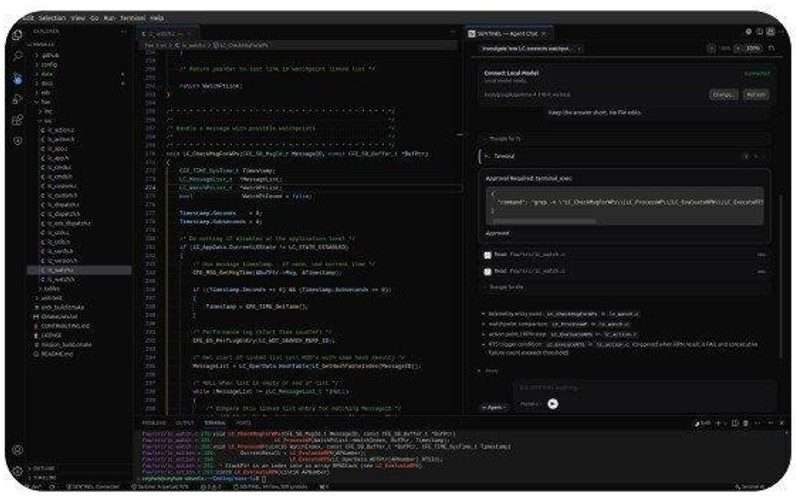
FIG. 03 A formal-verification session in the operator workspace, editor and agent side by side, with proof obligations reported for engineer review. Layout varies by deployment.
Four dimensions of contribution
The ASO project contributes across four dimensions: tempo, assurance, governance, and human control. Tempo shrinks the delay between a fielded threat and a fielded fix. Assurance pairs every change with machine-checkable rules and structured evidence, from tests to proofs to software bills of materials. Governance embeds Risk Management Framework and Authorization to Operate logic directly into the development lifecycle. Human control keeps commanders and engineers able to see what an ASO proposed, what it executed, and how that action related to operational behavior.
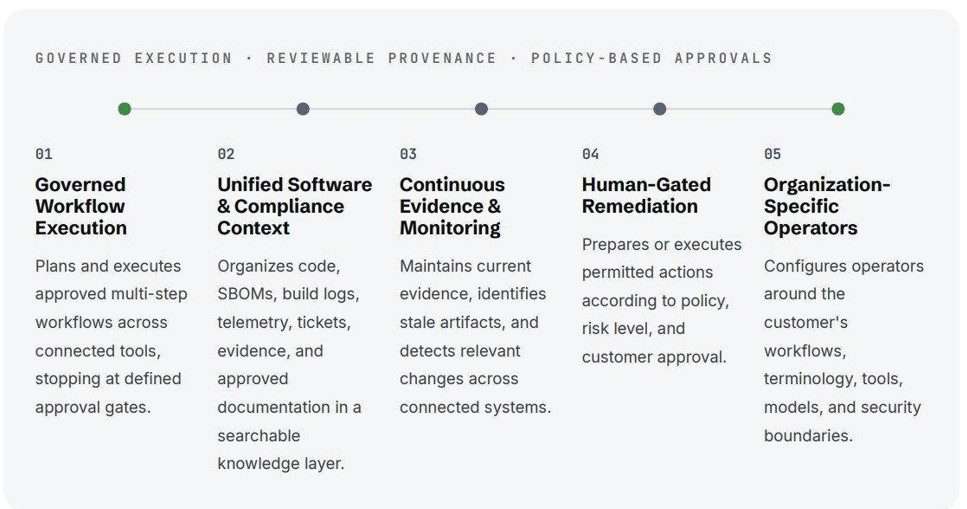
FIG. 05 Enabling capabilities that operate across the four domains. Scope and availability depend on connected tools, configuration, and deployment environment.
Noah Labs is set to deploy its technology at JIFX 26-4, the Joint Interagency Field Experimentation event hosted by the Naval Postgraduate School, running from 10 to 14 August 2026, an early opportunity to test the ASO model against operational, government-relevant problem sets.
Taken together, the pitch is straightforward: software that changes at operational tempo without escaping institutional control. Whether that promise holds up will depend less on the pipeline’s code-writing speed than on how convincingly its approval gates, audit logs, and human-review steps perform once they meet a live evaluation environment such as JIFX.

FIG. 06 Software velocity now sits inside the kill chain alongside conventional fires; the pace of code change increasingly tracks the pace of the fight itself. Photo: Vony Razom / Unsplash.
Murat Isik is the Founder and CEO of Noah Labs AI where he is building Sentinel, an AI-native, air-gapped software engineering platform designed for government and highly regulated industries. He is currently pursuing a PhD in Electrical Engineering focused on machine learning hardware and has a background in electrical engineering with experience at companies including Intel and Lattice Semiconductor. A two-time founder, Murat previously co-founded Type 1 Compute and Chip Interfaces, and brings deep expertise at the intersection of AI systems and hardware, with a focus on deploying advanced AI capabilities in secure environments where traditional tools cannot operate.